
Knee pain is one of the most common musculoskeletal problems affecting people of all ages across Wayanad and Kerala. Whether caused by arthritis, sports injuries, muscle weakness, prolonged sitting, or overuse, knee pain can make simple activities such as walking, climbing stairs, or standing for long periods extremely difficult.
The good news is that physiotherapy and targeted exercises can help reduce pain, improve mobility, and strengthen the muscles supporting the knee joint — often without the need for surgery.
In this guide, our physiotherapists at Physio Dynamics share the most effective exercises that may help manage knee pain and improve knee function, recommended by our lead physiotherapist Sandra Thomas, BPT.
Important: These exercises are for general guidance only. Always consult a qualified physiotherapist before starting any exercise programme, particularly if you have an existing injury, recent surgery, or severe pain. A proper assessment is essential to identify the cause of your knee pain and create a personalised plan.
Common Causes of Knee Pain
Knee pain can occur due to a wide range of conditions. Understanding the cause is the first step toward effective treatment:
A proper physiotherapy assessment at our clinic in Panamaram, Wayanad can identify the exact cause and help create a personalised treatment plan tailored to your specific needs.
Benefits of Exercise for Knee Pain
Regular therapeutic exercises, when performed correctly and consistently, can deliver significant benefits:
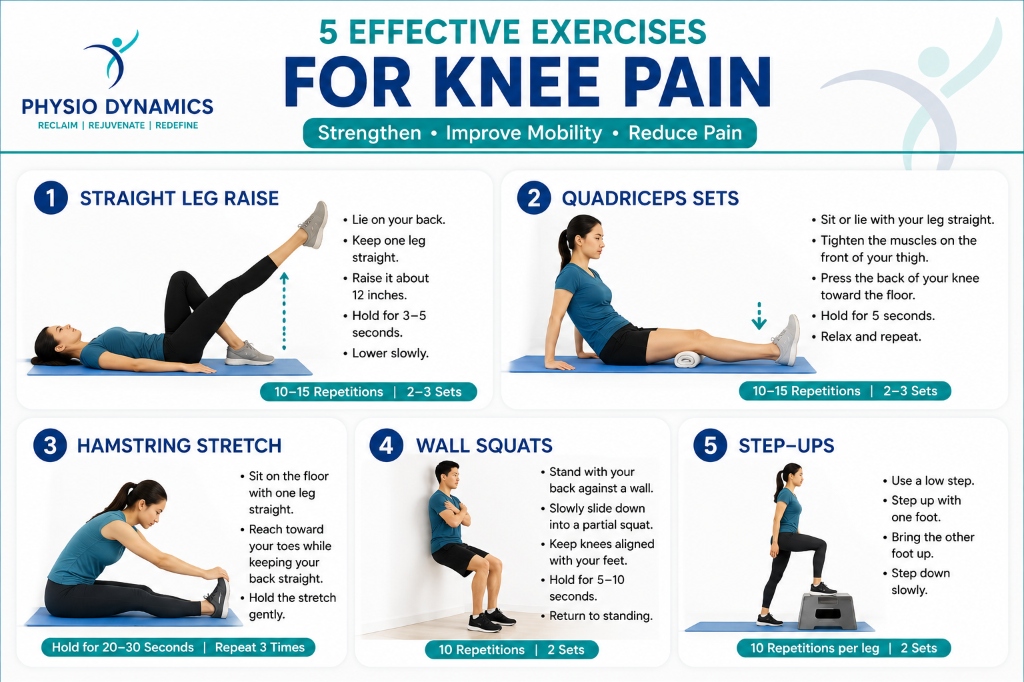
5 Effective Exercises for Knee Pain recommended by Physio Dynamics, Panamaram, Wayanad
5 Best Exercises for Knee Pain
Straight Leg Raise
This exercise strengthens the quadriceps muscles without placing excessive stress on the knee joint — making it ideal for people with significant knee pain or those early in their recovery.
How to Perform
- Lie flat on your back on a firm surface.
- Keep one knee bent with foot flat on the floor, and keep the other leg straight.
- Tighten the thigh muscle of the straight leg.
- Slowly raise the straight leg about 12 inches (30 cm) off the ground.
- Hold for 3–5 seconds, then lower slowly and controlled.
Quadriceps Sets
Quadriceps sets help improve muscle activation and knee stability. This is often one of the first exercises recommended after a knee injury or surgery because it activates the muscle without joint movement.
How to Perform
- Sit or lie with your leg extended straight on the floor.
- Place a small rolled towel under your knee for comfort if needed.
- Tighten the muscles on the front of your thigh (quadriceps).
- Press the back of your knee gently toward the floor.
- Hold for 5 seconds, then relax completely.
Hamstring Stretch
Tight hamstrings are a frequently overlooked contributor to knee pain. Stretching the hamstrings reduces tension across the back of the knee and improves overall lower limb flexibility.
How to Perform
- Sit on the floor with one leg extended straight out in front of you.
- Keep the other leg bent or extended, whichever is comfortable.
- Keeping your back straight, reach forward toward your toes.
- Stop when you feel a gentle stretch at the back of the thigh — do not bounce.
- Hold the stretch gently and breathe normally.
Wall Squats
Wall squats are a controlled, low-impact way to strengthen the quadriceps and gluteal muscles, both of which are critical for knee joint support and stability during daily activities.
How to Perform
- Stand with your back flat against a wall, feet shoulder-width apart.
- Place feet about 30–45 cm away from the wall.
- Slowly slide your back down the wall into a partial squat position.
- Keep knees aligned over your feet — do not let them cave inward.
- Hold the position for 5–10 seconds, then slowly return to standing.
Step-Ups
Step-ups are a functional exercise that closely mimics everyday activities like climbing stairs. They help build knee strength, balance, and functional mobility in a controlled way.
How to Perform
- Stand in front of a low step or stair (approximately 15–20 cm high).
- Step up with one foot, placing it fully on the step.
- Push through the heel and bring the other foot up to meet it.
- Step back down slowly and with control, leading with the same foot.
- Alternate leading legs or complete all reps on one side before switching.
When Should You See a Physiotherapist?
While these exercises can be helpful for many people, professional assessment is important to ensure you are doing the right exercises for your specific condition.
Seek Physiotherapy Advice If:
- Knee pain persists for more than a few days without improvement
- Swelling develops around the knee
- Walking or weight-bearing becomes difficult
- You experience instability, giving way, or locking of the knee
- Pain is affecting your sleep or daily activities
- You have had a recent fall or injury to the knee
Early intervention typically leads to faster recovery and better long-term outcomes. Do not wait until the pain becomes severe before seeking professional help.
How Physiotherapy Helps Knee Pain
At Physio Dynamics Physiotherapy & Sports Rehabilitation Centre in Panamaram, Wayanad, we provide comprehensive, evidence-based care for knee pain. Our services include:
- Detailed orthopedic physiotherapy assessment to identify the root cause
- Personalised exercise programmes tailored to your condition
- Manual therapy techniques to reduce pain and improve mobility
- Sports injury rehabilitation
- Strength and conditioning programmes
- Post-surgical rehabilitation (knee replacement, ACL surgery, etc.)
- Patient education for long-term self-management
Our goal is to help patients regain mobility, reduce pain, and return safely to the activities they love — whether that is daily life, work, or sport.
Frequently Asked Questions
Common questions about exercises and physiotherapy for knee pain relief
Book a Physiotherapy Assessment in Wayanad
If knee pain is limiting your daily activities, let our expert physiotherapists help identify the cause and guide your recovery.