
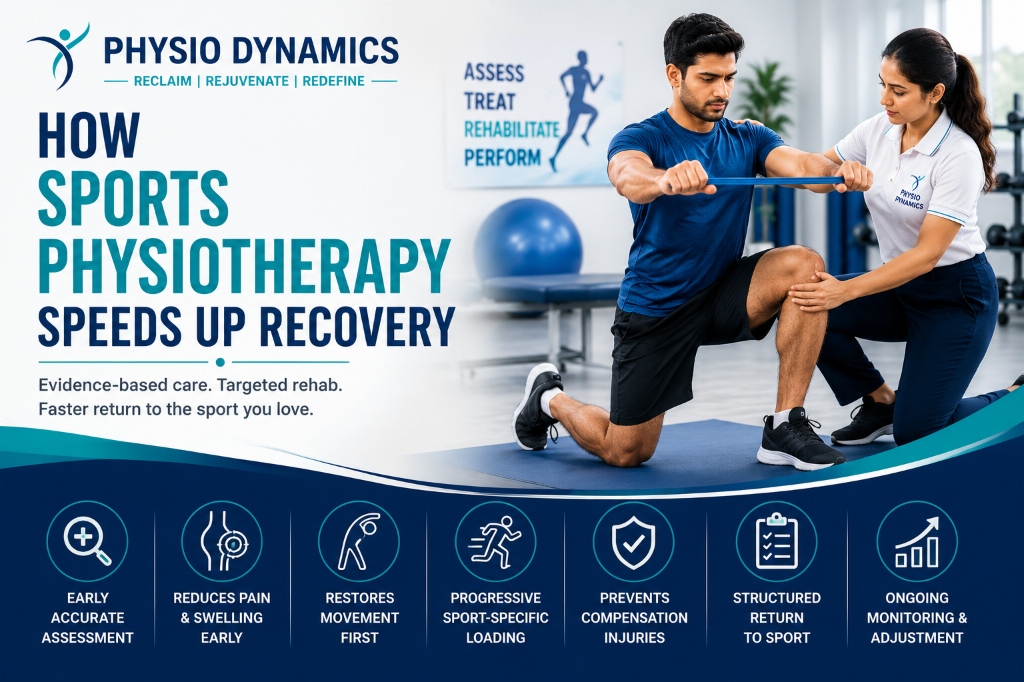
When you suffer a sports injury, the most pressing question on your mind is usually: "How fast can I get back to playing?" Whether you're a professional athlete, a dedicated runner, or a weekend football warrior, sitting on the sidelines is frustrating.
While rest is important, prolonged inactivity can actually delay healing. This is where sports physiotherapy makes a crucial difference. By taking an active, structured approach to rehabilitation, sports physiotherapy doesn't just heal the injury—it accelerates the recovery process safely.
Here’s exactly how sports physiotherapy speeds up your recovery from a sports injury.
1. Early Intervention and Swelling Control
The first 48 to 72 hours after an injury are critical. Many people make the mistake of complete immobilization, which can lead to joint stiffness and muscle wasting. A sports physiotherapist will intervene early to:
- Manage pain and reduce excessive swelling using targeted compression, ice, and manual techniques.
- Protect the injured tissue from further damage without restricting completely safe movements.
- Promote blood flow to the injured area, which delivers essential nutrients required for tissue repair.
2. Targeted and Progressive Rehabilitation
Once the initial acute phase passes, recovery relies on progressively loading the injured tissue. Simply resting until it "feels better" often results in weak, tight tissue that is highly susceptible to re-injury.
A physiotherapist creates a targeted exercise programme that introduces the right amount of stress to the healing tissue at the right time. This progressive loading stimulates collagen production, ensuring that healing ligaments, tendons, or muscles grow back strong and aligned, significantly reducing your recovery timeline.
3. Correcting Biomechanics and Preventing Compensation
When you're injured, your body naturally tries to avoid pain by altering how you move—a process known as compensation. For example, if you sprain your left ankle, you'll put more weight on your right leg. If left unchecked, this altered biomechanics can lead to secondary injuries in your knees, hips, or lower back.
A sports physiotherapist identifies these poor movement patterns early on and uses manual therapy and specific exercises to correct them. By ensuring your body mechanics are functioning properly, you avoid setbacks that would otherwise stall your recovery.
4. Hands-On Manual Therapy
Sports physiotherapists don't just give you exercises; they provide hands-on manual therapy. Techniques such as joint mobilization, soft tissue massage, and myofascial release are used to:
- Break down scar tissue that restricts movement.
- Release tight muscles surrounding the injury.
- Restore normal joint mechanics, allowing you to perform your rehabilitation exercises more effectively and with less pain.
5. A Structured Return-to-Sport Programme
One of the biggest reasons athletes suffer prolonged absences is returning to sport too soon and suffering a relapse. Feeling pain-free in daily life is very different from being able to sprint, jump, tackle, or swing a racquet at full intensity.
Sports physiotherapy bridges this gap with a structured return-to-sport programme. Before you are cleared to play, your physiotherapist will put you through functional testing specific to your sport. They will simulate the explosive movements, direction changes, and physical loads you will face in competition, ensuring your body is 100% ready. This prevents the dreaded cycle of re-injury, which is the biggest enemy of a fast recovery.
Don't Let an Injury Keep You Sidelined
If you want to recover faster, stronger, and safer, expert physiotherapy is your best path forward. Book your assessment today at our Wayanad clinic.
Frequently Asked Questions
Common questions about accelerating sports injury recovery with physiotherapy