
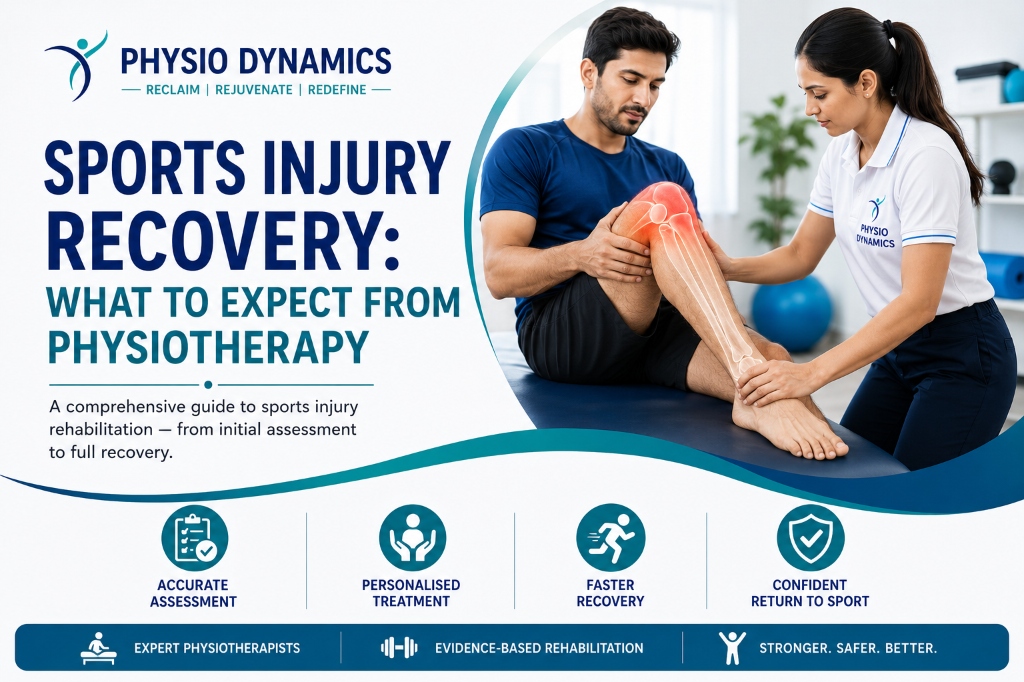
Following a sports injury (whether an ACL tear, muscle strain, or joint sprain), the traditional advice was often simply to "rest and apply ice." However, modern sports science has proven that prolonged, absolute rest is actually counterproductive.
Resting a damaged muscle or joint in complete isolation can lead to joint stiffness, muscle wasting (atrophy), and the formation of weak, disorganized scar tissue. Active, structured loading under the guidance of a **sports physiotherapist** is essential to speed up tissue healing, restore range of motion, and build structural strength.
At **Physio Dynamics** in Panamaram, Wayanad, chief physiotherapist **Dr. Sandra Thomas (PT)** utilizes progressive load conditioning. We guide athletes through the physiological phases of tissue healing so they can return to their sport safely.
Active Healing: Guided movement increases local circulation, bringing essential nutrients and oxygen to damaged tissues to accelerate cellular repair.
The 3 Phases of Tissue Healing & Physiotherapy Intervention
To speed up recovery, physiotherapy works in harmony with the body's natural healing timeline:
The Inflammatory Phase (Days 1–5)
Following an injury, the body increases blood flow to the area, causing swelling, heat, and pain. Sports physiotherapy manages this phase using compression, active lymphatic drainage, and pain-free passive movements, preventing joint stiffness without placing load on the damaged tissue.
The Proliferation Phase (Days 5–21)
During this phase, the body begins laying down new collagen fibers to repair the tear. However, these fibers are initially disorganized and weak. We introduce controlled, light resistance training. Placing mild tension on the tissue forces the new fibers to align parallel to the line of stress, building a strong, flexible repair.
The Remodeling Phase (Day 21 onwards)
The final phase involves mature scar tissue strengthening. Sports physical therapy introduces progressive load conditioning, sport-specific movements (e.g., cutting, sprinting), and explosive plyometrics, preparing the muscle or tendon to handle high-velocity forces.
The Danger of Prolonged Absolute Rest
Resting completely for weeks causes several negative changes:
- Muscle Wasting: Muscles can lose significant strength and volume in just 1-2 weeks of absolute rest.
- Tendon Floppiness: Tendons require load to remain stiff and act like springs. Absolute rest makes them soft and weak.
- Disorganized Healing: Unloaded scar tissue heals in a random, tangled pattern, making it highly prone to tearing again when you resume playing.
Accelerate Your Recovery with Physio Dynamics
At **Physio Dynamics** (Panamaram, Wayanad), we monitor your tissue healing parameters closely. We offer:
Frequently Asked Questions
Accelerate Your Path Back to Play
Ditch absolute rest and choose active, guided recovery. Book your sports assessment with us today.