
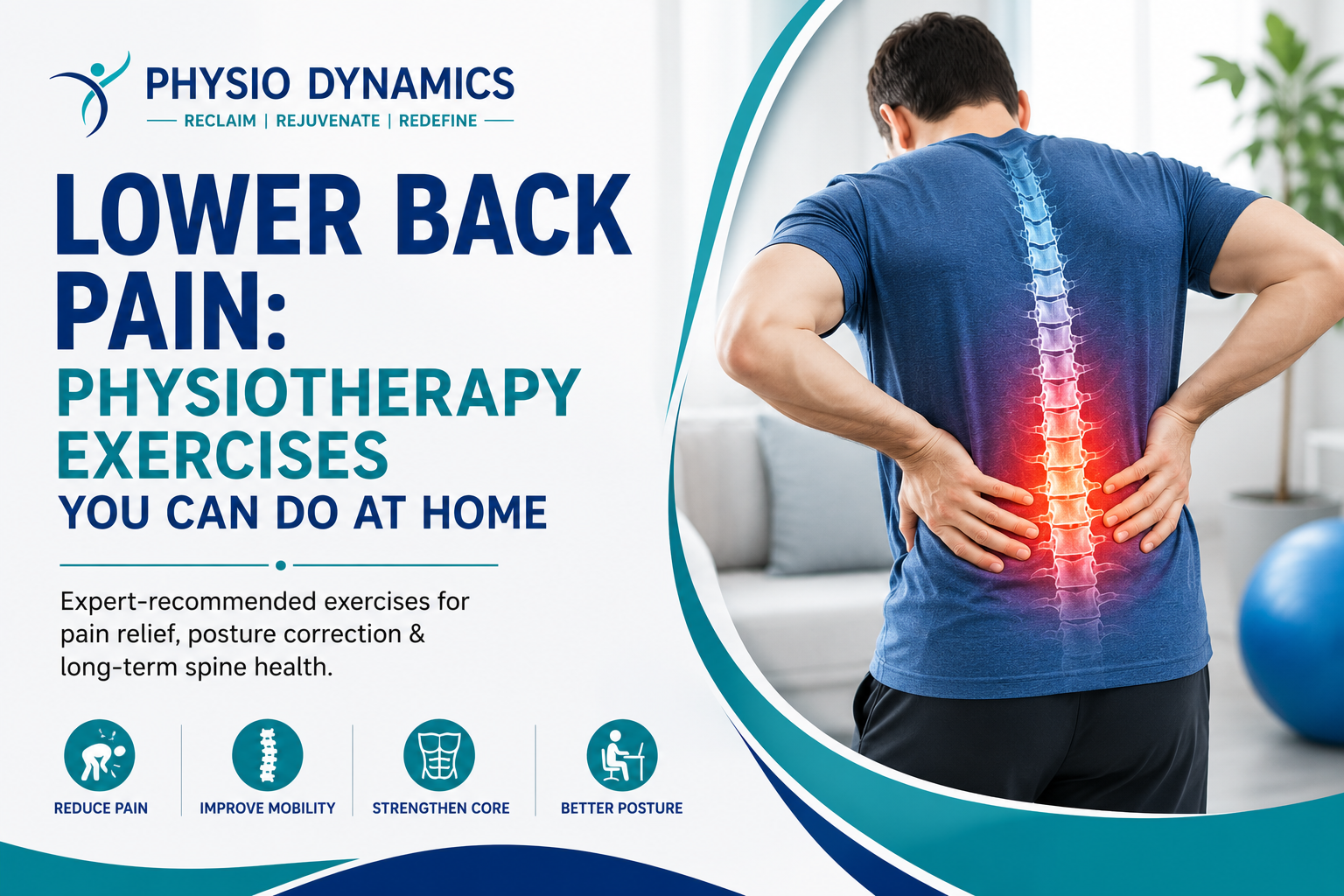
Lower back stiffness, sharp pelvic aches, or a dull pain around the tailbone are extremely common experiences during pregnancy. In fact, over 60% of women suffer from **pregnancy-related back pain** or **pelvic girdle pain (PGP)** at some stage of their journey.
As your baby grows, your center of gravity shifts forward. To prevent falling, you naturally lean backward, exaggerating the arch in your lower back (lumbar lordosis). Additionally, pregnancy hormones like **Relaxin** soften your ligaments, making your pelvic joints less stable and putting extra pressure on your spinal discs.
At **Physio Dynamics** in Panamaram, Wayanad, lead physiotherapist **Dr. Sandra Thomas (PT)** provides gentle, low-impact exercise programs. These help stabilize the pelvis, relieve lumbar pressure, and keep you comfortable and active throughout your pregnancy.
Precautions: Avoid exercising flat on your back for more than a few minutes after the first trimester, as the weight of the uterus can compress the inferior vena cava. Always clear exercises with your obstetrician first.
Why Does Back Pain Occur in Pregnancy?
Several physiological factors contribute to spinal stress during pregnancy:
- Hormonal Laxity: The hormone Relaxin increases ligament laxity, making joints in the pelvis and lower spine mobile and prone to irritation.
- Postural Shift: The growing belly pulls the pelvis forward (anterior pelvic tilt), straining the lower back muscles.
- Core Weakness: The abdominal muscles stretch and separate (diastasis recti), reducing support for the lower spine.
5 Safe Stretches & Exercises for Pregnancy
Cat-Cow Stretch
This exercise gently mobilizes the spine and pelvis, helping relieve pressure on the lumbar spine in a non-weight-bearing position.
How to Perform
- Get on your hands and knees (tabletop position) with hands under shoulders.
- Slowly round your back upward toward the ceiling, tucking your chin slightly (Cat).
- Return to starting position. Only let your back dip slightly (do not over-sag the lumbar spine) (Cow).
Pelvic Tilts
Pelvic tilts activate the deep core muscles and decompress the lower spine, helping counter the pelvic tilt caused by the baby's weight.
How to Perform
- Lie on your back with knees bent and feet flat on the floor (use a small pillow under your head).
- Flatten your lower back against the floor by gently contracting your abdominal muscles and tilting your pelvis upward.
- Hold for 5 seconds.
- Relax. Repeat.
Wide Child's Pose
A classic, safe relaxation stretch that decompresses the spine, stretches the glutes, and helps relax the pelvic floor muscles.
How to Perform
- Kneel on the floor, keeping your knees wide apart to accommodate your belly. Touch your big toes together.
- Lower your hips back onto your heels.
- Extend your arms forward on the floor and gently lower your chest and forehead down.
- Take 5 deep breaths in this position.
Kegel Exercises (Pelvic Floor Activation)
A strong pelvic floor supports the extra load of pregnancy, stabilizes the pelvis, and aids in post-delivery recovery.
How to Perform
- Identify your pelvic floor muscles by contracting the muscles you would use to stop passing gas or urine mid-stream.
- Contract these muscles, lifting upward and inward.
- Hold the contraction for 5 seconds.
- Release and relax completely for 5 seconds. Repeat.
Tailor Sitting Stretch
Tailor sitting opens up the pelvis, stretches the inner thigh muscles (adductors), and improves circulation to the lower body.
How to Perform
- Sit on the floor with your back straight, knees bent, and the soles of your feet touching.
- Gently let your knees drop toward the floor. Do not force them down.
- Hold for 20-30 seconds. You can lean against a wall for support.
Quick Posture & Sleeping Tips
Simple daily adjustments can prevent back strain:
- Sleeping: Sleep on your side with a pillow between your knees and another supporting your belly to keep your pelvis aligned.
- Sitting: Use a small rolled-up towel behind your lower back for lumbar support. Avoid crossing your legs.
- Standing: Stand with a wide stance to distribute your weight evenly. Avoid locking your knees.
How Physiotherapy Helps Prenatal Patients
At **Physio Dynamics** (Panamaram, Wayanad), we offer safe, non-invasive therapeutic options for pregnant patients, including:
Frequently Asked Questions
A Pain-Free Pregnancy Journey
If lower back or pelvic pain is making pregnancy difficult, let our expert maternal health physiotherapists support you.