
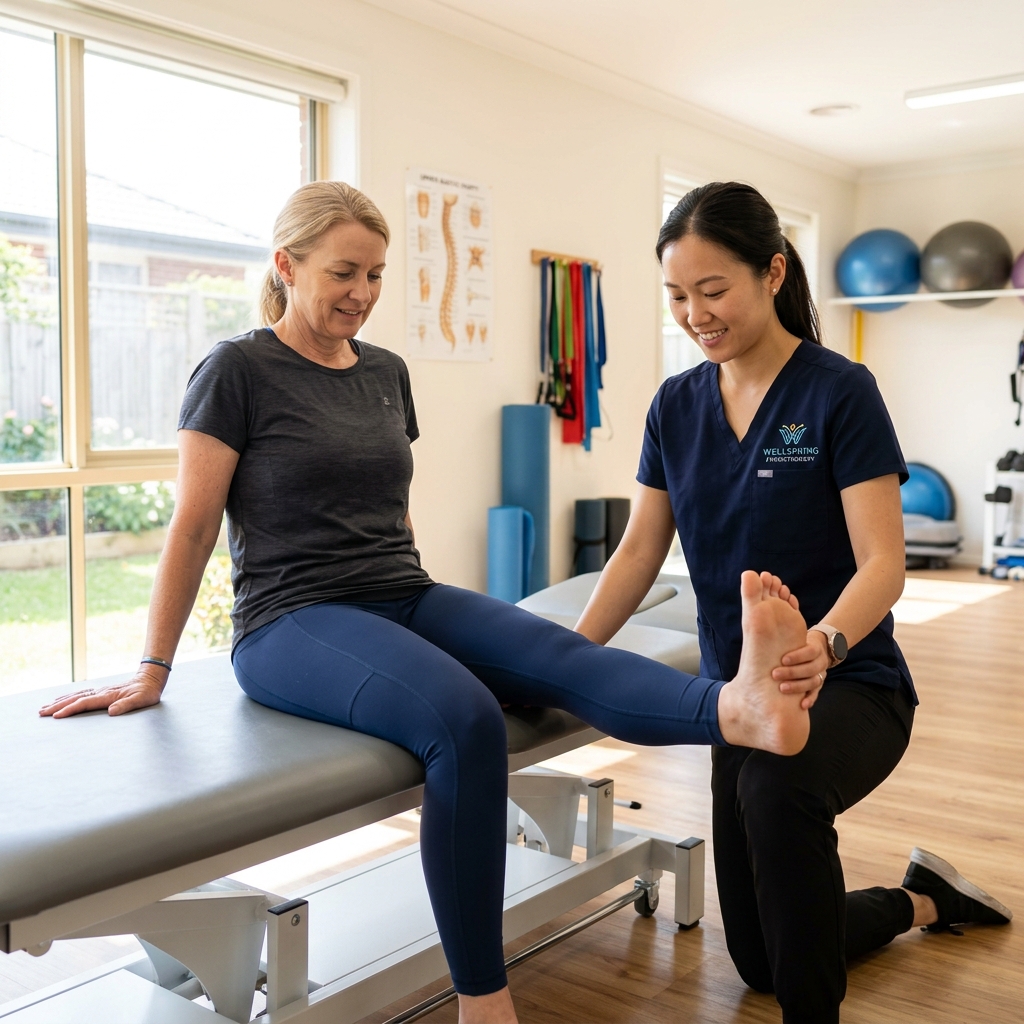
Few pain sensations match the sharp, burning, and electric discomfort of sciatica. Stretching from the lower lumbar spine, through the buttocks, and radiating down the back of the leg to the calf or foot, sciatica can make walking, sitting, or even sleeping near-impossible.
Sciatica itself is not a medical condition, but a symptom of an underlying issue — usually a herniated disc, bone spur, or piriformis muscle spasm compressing the sciatic nerve roots.
At our clinic in Panamaram, Wayanad, we emphasize that movement is medicine. While complete bed rest was once recommended, clinical studies show that active, targeted physiotherapy exercises are far more effective at reducing nerve compression, encouraging blood flow, and speeding up recovery.
Important Note: If your sciatica is accompanied by progressive leg weakness, numbness, or loss of bowel/bladder control, seek immediate medical attention. Always consult a physiotherapist before performing these stretches to ensure they align with the cause of your nerve compression.
What Causes Sciatica?
To treat sciatica effectively, you must understand where the nerve is being pinched:
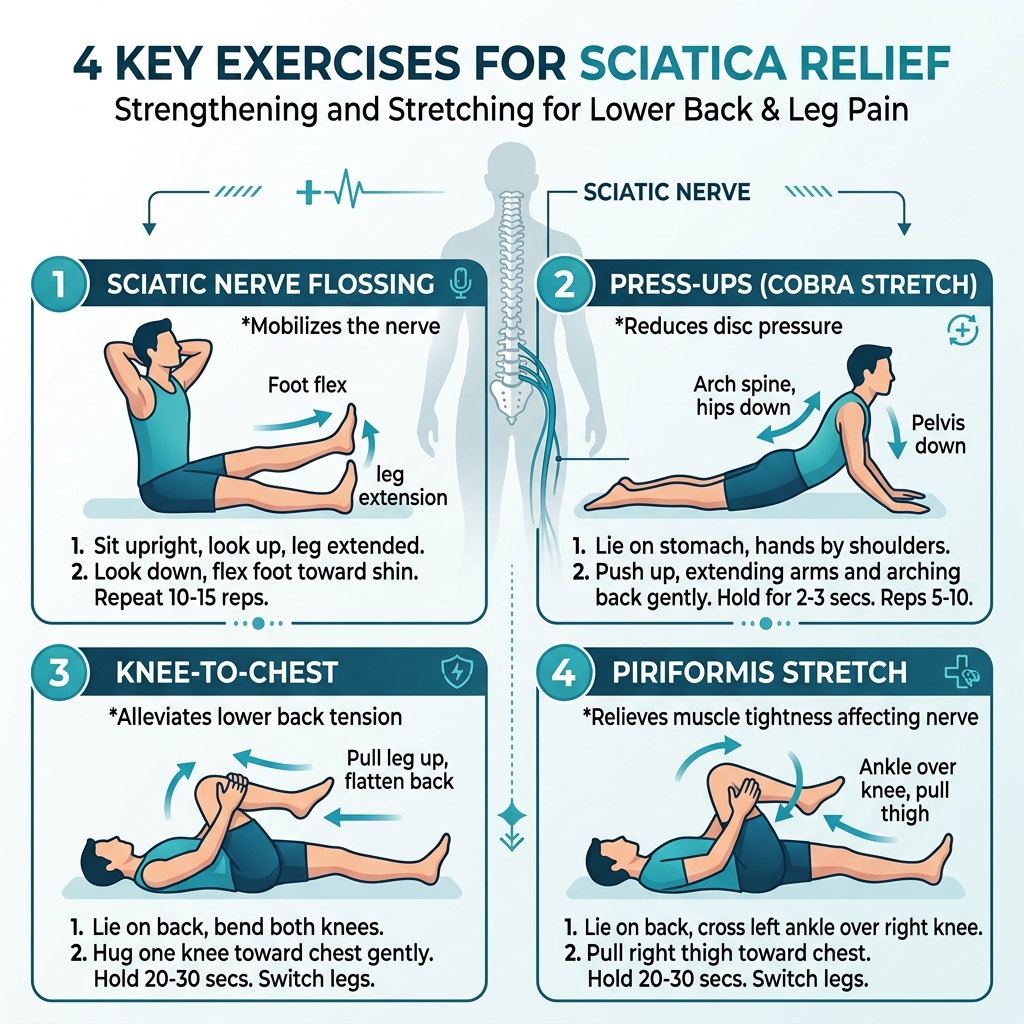
4 Key Exercises for Sciatica Relief recommended by Physio Dynamics, Panamaram, Wayanad
5 Best Exercises for Sciatica Pain Relief
Sciatic Nerve Flossing (Nerve Glide)
Nerve flossing gently pulls and glides the sciatic nerve through its pathway, helping to release adhesions, reduce irritation, and improve nerve mobility.
How to Perform
- Sit upright in a chair with both feet flat on the floor.
- Extend your affected leg straight out in front of you while looking up at the ceiling.
- Slowly bend your knee and point your toes down while tucking your chin toward your chest.
- Alternate slowly between these two positions. Do not hold the end positions — keep it a fluid motion.
Prone Press-Ups (Cobra Stretch)
If your sciatica is caused by a herniated or bulging disc, prone press-ups encourage the disc material to move away from the nerve root, centralizing your pain (moving it from your leg back to your lower back, which is a sign of recovery).
How to Perform
- Lie flat on your stomach on a firm surface.
- Place your hands flat on the floor under your shoulders, like a push-up starting position.
- Slowly push your upper body up, keeping your hips and pelvis flat on the floor.
- Arch your back gently as far as comfortable. Hold for 2 seconds, then lower slowly.
Single Knee-to-Chest Stretch
This stretch relieves tension in the lower back lumbar muscles and opens up the spinal joints, reducing compression on the exiting nerve roots.
How to Perform
- Lie flat on your back with knees bent and feet flat on the floor.
- Grasp behind your affected knee with both hands.
- Gently pull the knee toward your chest until you feel a comfortable stretch in your lower back and glutes.
- Hold for 20-30 seconds, then slowly return to the starting position.
Figure-4 Piriformis Stretch
The piriformis muscle lies directly over the sciatic nerve. If it becomes tight or spasms, it compresses the nerve. This stretch releases the piriformis muscle safely.
How to Perform
- Lie on your back with knees bent and feet flat.
- Cross the ankle of your painful leg over the opposite knee (forming a '4' shape).
- Reach through and pull the thigh of the uncrossed leg toward your chest.
- Hold when you feel a deep stretch in the buttock of the painful leg.
Seated Hamstring Stretch
Tight hamstrings pull on the pelvis and increase strain on the lower back, worsening sciatic nerve tension. A gentle seated stretch avoids lumbar flexion while targeting the hamstrings.
How to Perform
- Sit on the edge of a firm chair.
- Extend your affected leg straight out, keeping your heel on the floor and toes pointed up.
- Keep your back straight and hinge forward at the hips. Do not round your spine.
- Stop when you feel a gentle stretch behind your thigh. Hold without bouncing.
Sciatica Care: Do's and Don'ts
DO's
- Walk on flat ground: Light walking helps reduce stiffness and maintains circulation.
- Maintain good sitting posture: Use a lumbar support roll to keep your spine neutral.
- Perform movements slowly: Nerve flossing must be slow and steady.
DON'Ts
- DON'T bend forward to touch your toes with straight legs — this severely pinches the lumbar nerve roots.
- DON'T sit for more than 30 minutes at a time.
- DON'T perform high-impact exercises (jogging, heavy weight lifting) during acute sciatica flare-ups.
How Physiotherapy Resolves Sciatica
At Physio Dynamics (Panamaram, Wayanad), our goal is to identify the root cause of your sciatica. Our comprehensive treatment protocol includes:
Frequently Asked Questions
Relieve Your Sciatica Pain Today
If radiating leg pain is stopping you from living normally, let our expert physiotherapists guide your recovery.