
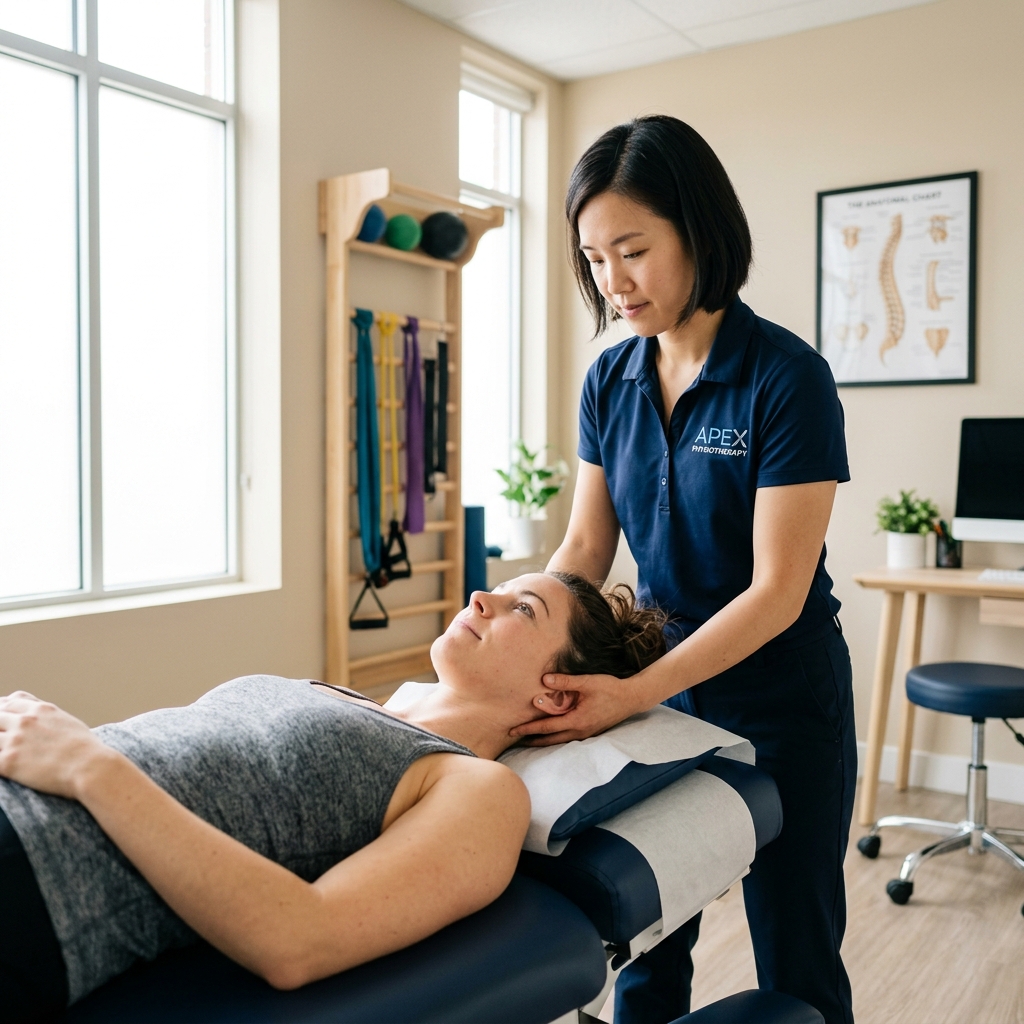
In today's digital era, **neck pain and stiffness** have become near-universal complaints. Whether it is from looking down at your smartphone for hours ("text neck"), working long shifts at a computer desk, or sleeping on an unsupportive pillow, our neck muscles are constantly overworked.
The cervical spine is a highly flexible, delicate structure that supports the weight of your head (which weighs about 5 kg in neutral, but acts like 25 kg when tilted forward). When postural muscles weaken, extra strain is placed on cervical vertebrae, leading to pain, spasms, and nerve compression.
At **Physio Dynamics** in Panamaram, Wayanad, led by **Dr. Sandra Thomas (PT)**, we focus on identifying the specific cause of neck pain and using targeted manual therapies, postural retraining, and specialized stretches to restore comfortable, pain-free movement.
Safety Warning: If your neck pain is accompanied by shooting arm pain, numbness in fingers, or dizziness, avoid stretching and seek a comprehensive physiotherapy assessment immediately.
Common Causes of Neck Pain
Neck pain can stem from various sources. Understanding the source helps define the correct treatment approach:
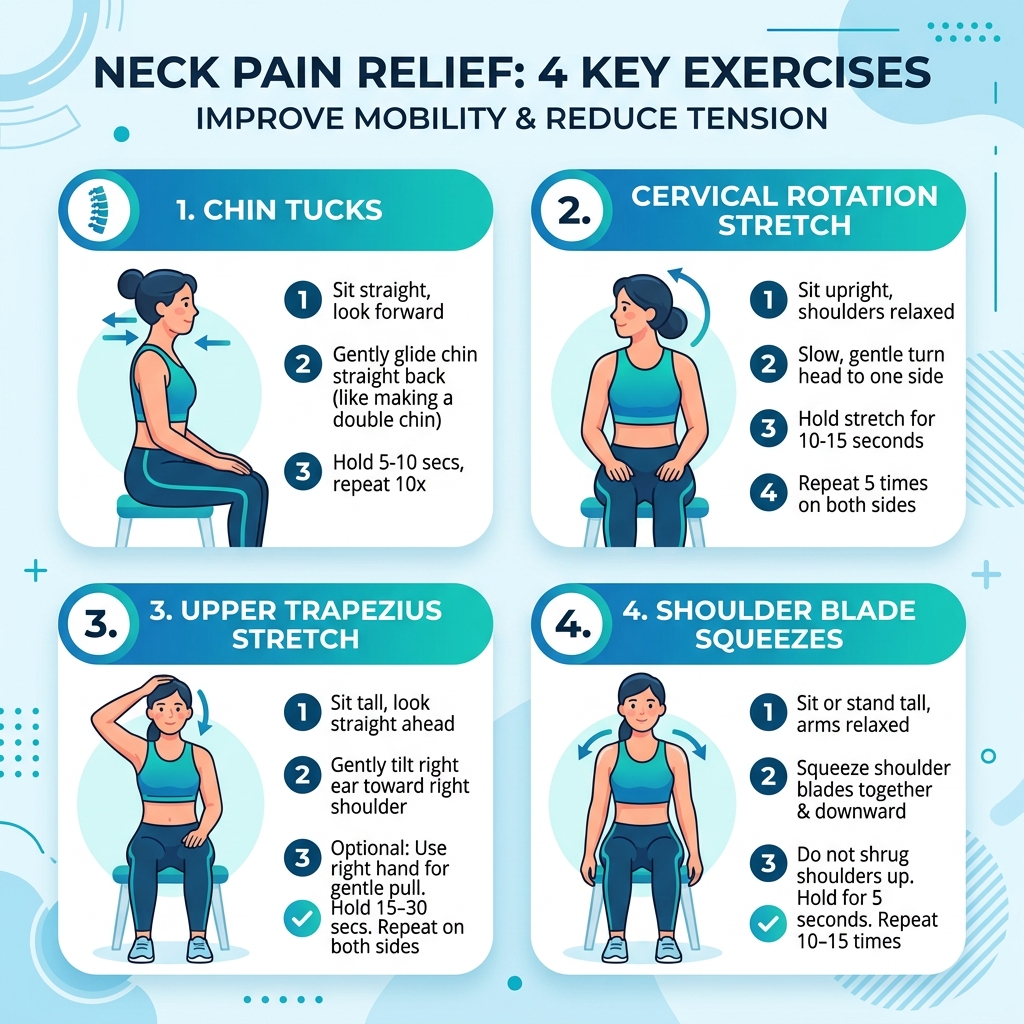
4 Essential Exercises for Neck Pain recommended by Physio Dynamics, Panamaram, Wayanad
4 Key Exercises for Neck Pain Relief
Chin Tucks (Cervical Retraction)
Chin tucks strengthen the deep neck flexor muscles and pull the head back into alignment, correcting "forward head posture."
How to Perform
- Sit or stand upright, looking straight ahead.
- Keep your chin level and slowly glide your head straight backward, as if making a double chin. Do not tilt your head down.
- Hold the tucked position for 5 to 10 seconds.
- Relax your head back forward to neutral.
Cervical Rotation Stretch
This exercise maintains and improves rotational mobility of the upper cervical spine, reducing neck stiffness.
How to Perform
- Sit upright in a chair with your shoulders relaxed.
- Slowly turn your head to the right until you feel a gentle stretch. Keep your chin level.
- Hold for 10-15 seconds.
- Return to center, then repeat to the left side.
Upper Trapezius Stretch
The upper trapezius muscle becomes extremely tight with stress and poor desk ergonomics. Stretching it provides immediate relief from shoulder-neck tightness.
How to Perform
- Sit tall, placing one hand behind your lower back to anchor your shoulder.
- Gently tilt your opposite ear down toward your shoulder.
- For a deeper stretch, use your other hand to gently guide your head. Do not force.
- Hold the stretch, breathing deeply. Repeat on the opposite side.
Shoulder Blade Squeezes
This exercise strengthens the mid-back postural muscles, preventing your shoulders from rounding forward and placing stress on your neck.
How to Perform
- Stand or sit tall with arms relaxed at your sides.
- Pull your shoulders back and squeeze your shoulder blades together and downward.
- Imagine squeezing a pencil between your shoulder blades.
- Hold the squeeze tightly for 5 seconds, then relax.
Daily Prevention Tips
Stretching is only part of the solution. Making small ergonomic adjustments is essential to prevent neck pain from returning:
- Elevate your screen: Ensure your computer monitor or phone is at eye level so you do not tilt your head forward.
- Take desk breaks: Standard desk rule — stand and perform 2 chin tucks every 45 minutes of sitting.
- Check your pillow: Use a pillow that supports the natural curve of your neck (avoid pillows that are too high or flat).
How Physiotherapy Treats Neck Pain
While home stretching helps manage mild stiffness, professional physiotherapy is crucial for persistent or severe cervical pain. At our Panamaram clinic, we utilize:
Frequently Asked Questions
Get Relief from Neck Pain Today
If neck stiffness is limiting your daily tasks, let Dr. Sandra Thomas (PT) help you regain full, comfortable mobility.