
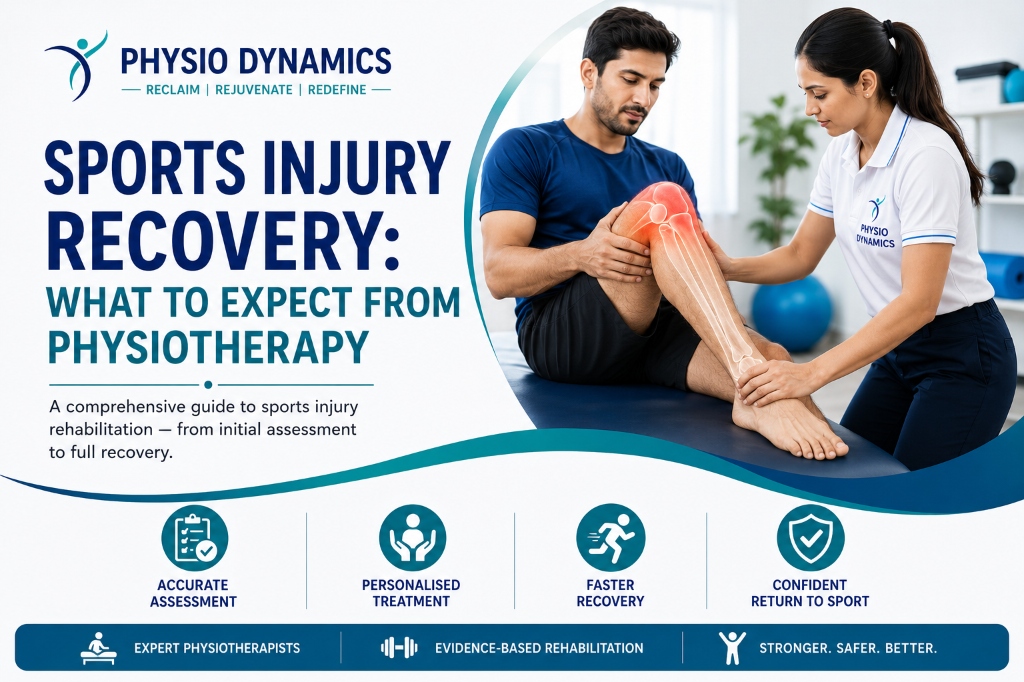
If you have recently increased your running mileage, started speed intervals, or changed your running shoes, you may have experienced a dull ache along your shin bone. This condition is commonly known as **Shin Splints**, or medically as **Medial Tibial Stress Syndrome (MTSS)**.
Shin splints represent inflammation of the tendons, muscles, and bone tissue (periosteum) surrounding the tibia. It is a classic overload injury, meaning the shin bone is absorbing more impact force than it can tolerate.
At **Physio Dynamics** in Panamaram, Wayanad, chief physiotherapist **Dr. Sandra Thomas (PT)** provides specialized shin splints rehabilitation. We help runners adjust their loading and gait patterns to heal safely and avoid stress fractures.
Do Not Run Through the Pain: Continuing to run with severe shin splints can crack the tibia bone, creating a stress fracture that requires months of absolute rest.
What Causes Shin Splints?
Shin splints develop when the load on the shin bone exceeds its healing rate, often due to:
- Sudden Mileage Spikes: Increasing running distance or speed too quickly (violating the 10% weekly limit rule).
- Hard Running Surfaces: Running on concrete roads instead of soft clay tracks or grass.
- Poor Foot Mechanics: Flat feet (overpronation) pull the shin muscles tightly against the bone lining.
- Worn-Out Shoes: Running in shoes that have lost their shock-absorbing capacity.
3 Recovery Exercises for Shin Splints
Rehab focuses on stretching tight calf muscles and strengthening the anterior shin stabilizers:
Gastrocnemius and Soleus Calf Stretches
Stand facing a wall. Step one foot back, keep the heel flat on the floor and the knee straight (Gastrocnemius stretch). Hold for 30 seconds. Next, bend both knees slightly while keeping the back heel flat (Soleus stretch). Hold for 30 seconds. Repeat 3 times. Tight calves pull on the shin attachments.
Tibialis Anterior Toe Raises
Lean your back against a wall with your feet 12 inches away. Keep your heels flat on the floor and lift your toes upward toward your shins. Hold for 2 seconds, then lower slowly. Complete 3 sets of 20 repetitions. This strengthens the front shin muscles to absorb impact.
Single-Leg Balance (Proprioception)
Stand on one foot on a flat surface and hold your balance for 60 seconds. To increase difficulty, stand on a soft cushion or close your eyes. Repeat 3 times on each leg. Balancing strengthens the small stabilizing muscles of the foot and ankle.
Shin Splints Care at Physio Dynamics
At **Physio Dynamics** (Panamaram, Wayanad), we target the root causes of shin overload:
Frequently Asked Questions
Rebuild Your Shin Bone Strength
Do not let shin pain turn into a bone stress fracture. Book a running assessment with our sports physio team today.