
A diagnosis of a **slip disc** (clinically known as a herniated or bulging disc) can feel incredibly alarming. Many patients immediately worry that they will need spinal surgery or face permanent physical limitations.
However, clinical statistics tell a very different and reassuring story: **over 90% of herniated discs heal successfully without surgery** through conservative care. The body has a remarkable capacity to reabsorb herniated disc material over time, provided the spine is kept moving in a safe, biomechanically correct way.
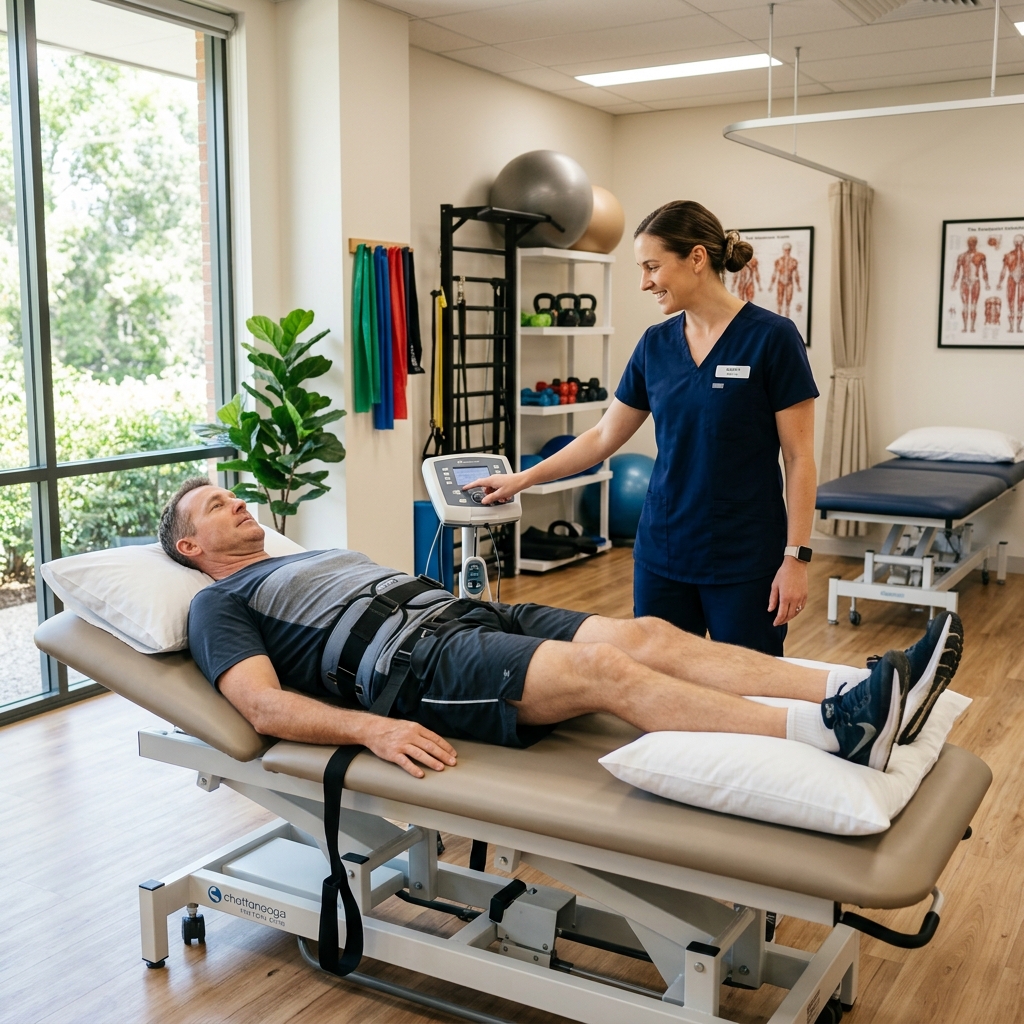
At **Physio Dynamics** in Panamaram, Wayanad, lead physiotherapist **Dr. Sandra Thomas (PT)** utilizes evidence-based spine rehabilitation protocols (including the McKenzie Method and lumbar stabilization) to relieve nerve compression and guide patients safely back to active life.
Important Note: This guide is for educational purposes. A slip disc requires a professional assessment. Avoid self-treating if you experience radiating pain down both legs, numbness in your saddle area, or severe motor weakness.
What Actually Happens in a Slip Disc?
Your spinal column consists of bones (vertebrae) cushioned by rubbery intervertebral discs. Think of a disc like a jelly doughnut: it has a tough outer ring (annulus fibrosus) and a soft jelly center (nucleus pulposus).
A "slip disc" occurs when the outer ring tears, allowing the soft inner jelly to bulge out. This bulging material can pinch or irritate nearby spinal nerves, resulting in local back pain or shooting leg pain (sciatica).
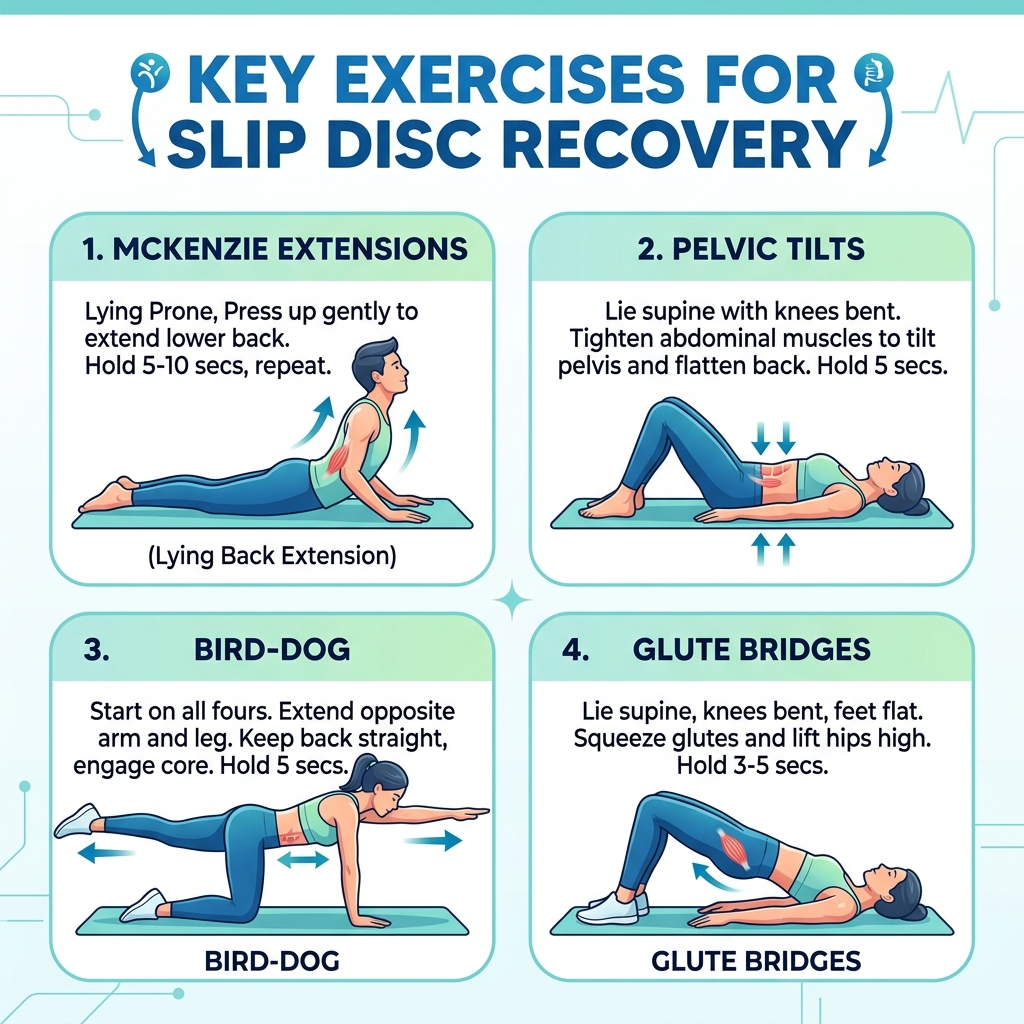
4 Essential Exercises for Slip Disc Recovery recommended by Physio Dynamics, Panamaram, Wayanad
4 Key Exercises for Slip Disc Recovery
McKenzie Extensions (Prone Press-Ups)
McKenzie back extensions encourage the bulging disc material to shift back inward toward the center of the spinal column, relieving direct pressure on the sciatic nerve roots.
How to Perform
- Lie flat on your stomach on a firm mat or bed.
- Place your hands flat next to your shoulders.
- Slowly push your upper body up while keeping your hips and pelvis relaxed flat on the floor.
- Arch your spine gently. Hold for 5–10 seconds at the top, then lower with control.
Pelvic Tilts
Pelvic tilts activate the deep core muscles (transversus abdominis) and help align the pelvis, flattening the lumbar spine to reduce pressure on the discs.
How to Perform
- Lie on your back with knees bent and feet flat on the floor.
- Tighten your abdominal muscles, pulling your belly button down toward your spine.
- Flatten your lower back firmly into the floor (tilting your pelvis slightly).
- Hold this contraction for 5 seconds, breathing normally, then relax.
The Bird-Dog Exercise
The Bird-Dog builds core and lower back endurance while keeping the lumbar spine in a safe, neutral position, which is essential for disc stabilization.
How to Perform
- Start on your hands and knees (quadruped position) with a flat back.
- Slowly extend one arm forward while extending the opposite leg backward.
- Keep your hips level and avoid arching your lower back.
- Hold for 5 seconds, then slowly return to starting and switch sides.
Glute Bridges
Glute bridges strengthen the glutes and hamstrings, helping to support the pelvis and reducing the physical load placed on the lumbar discs during daily movements.
How to Perform
- Lie flat on your back, knees bent, and feet flat shoulder-width apart.
- Squeeze your glutes and push through your heels to raise your hips.
- Create a straight line from your shoulders to your knees. Do not over-arch the lower back.
- Hold for 3–5 seconds, then lower down slowly.
Movements to Avoid
When recovering from an active slip disc, certain movements place excessive pressure on the lumbar spine and should be strictly avoided:
- Straight Leg Double Lifts: Places massive shear forces on the lumbar discs.
- Bent-over Toe Touches: Flexing the spine forward while legs are straight pushes the disc further backward.
- Heavy Deadlifts or Squats: Axial loading (compression from above) should be avoided in acute phases.
How Spine Physiotherapy Promotes Recovery
At **Physio Dynamics** (Panamaram, Wayanad), we do not just treat symptoms — we address the core mechanical issues causing disc overload. Our spine rehabilitation services include:
Frequently Asked Questions
Avoid Surgery with Guided Spine Rehab
If back pain or radiating leg numbness is holding you back, let our expert spine physiotherapists guide your recovery.