
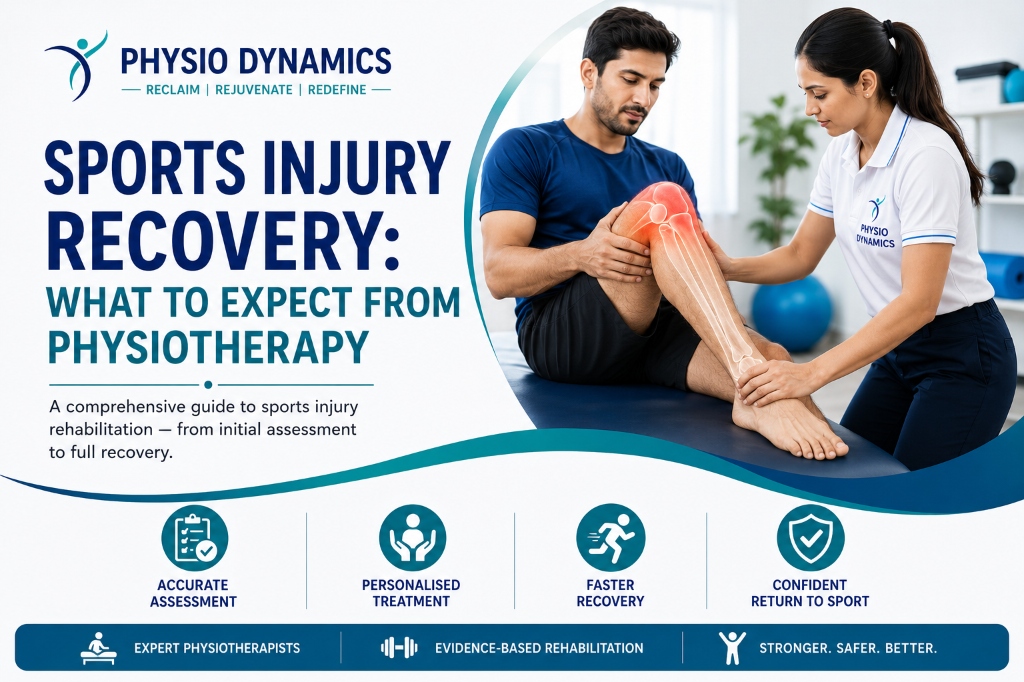
Whether you are a professional football player, a weekend runner, or an active badminton enthusiast, injuries are the single greatest obstacle to athletic progress. From sudden ligament tears (like ACL injuries) to gradual wear-and-tear (such as Tennis Elbow or Plantar Fasciitis), injuries sideline athletes and disrupt training.
Fortunately, up to 70% of sports injuries are entirely preventable. By correcting muscle imbalances, upgrading your warm-up routine, and respecting tissue recovery timelines, you can build a resilient body that handles high load and impact forces safely.
At **Physio Dynamics** in Panamaram, Wayanad, sports physical therapist **Dr. Sandra Thomas (PT)** focuses on biomechanical assessment and injury prevention. We help local athletes optimize their movement patterns to stay on the field and perform at their peak.
Overuse Injuries: Pain that builds up slowly over days or weeks (such as shin splints or shoulder pinching) indicates tissue overload. Do not "push through" overuse pain, as this converts mild tendonitis into chronic tendon damage.
5 Essential Sports Injury Prevention Tips
Perform a Dynamic Warm-Up
Static stretching (holding a stretch in place) before exercise relaxes your muscles, which actually reduces power output and increases injury risk. Instead, perform a **dynamic warm-up**—active movements that increase heart rate, warm up muscle tissue, and mobilize joints through their working range.
Sample Routine
- Leg Swings: 10 times forward and backward on each leg.
- High Knees Walking: 10 steps forward, pulling your knee to your chest.
- Butt Kicks: 15 seconds jogging in place, kicking heels to buttocks.
Build Proprioception & Balance
Proprioception is your brain's ability to sense your joint position in space. Strengthening this system allows your muscles to automatically stabilize your ankle or knee when you land awkwardly, preventing ligament sprains (like ACL or ankle rolls).
Exercise
Practice standing on one leg on a pillow or balance pad for 30 seconds daily. Advance by closing your eyes.
Progressive Strength Loading
Tissues (tendons, muscles, bones) fail when the load applied exceeds their capacity. Strengthening the supporting muscles (such as the glutes, hamstrings, and core) builds the structural capacity to absorb landing and impact forces.
Tip
Integrate compound movements like squats, glute bridges, and calf raises into your weekly training program.
Respect Tissue Recovery
Muscles do not grow stronger during training—they grow stronger during **rest**. Overtraining causes micro-damage to pile up faster than your body can repair it, leading to stress fractures or tendon ruptures.
Guidelines
Ensure at least 1-2 days of active recovery or rest per week, get 8 hours of sleep, and maintain hydration to keep soft tissues elastic.
Cool-Down & Static Stretching
After exercise, your muscles are warm and shortened. This is the perfect window to perform static stretches (holding a stretch for 30 seconds) to restore normal muscle length, prevent stiffness, and stimulate recovery.
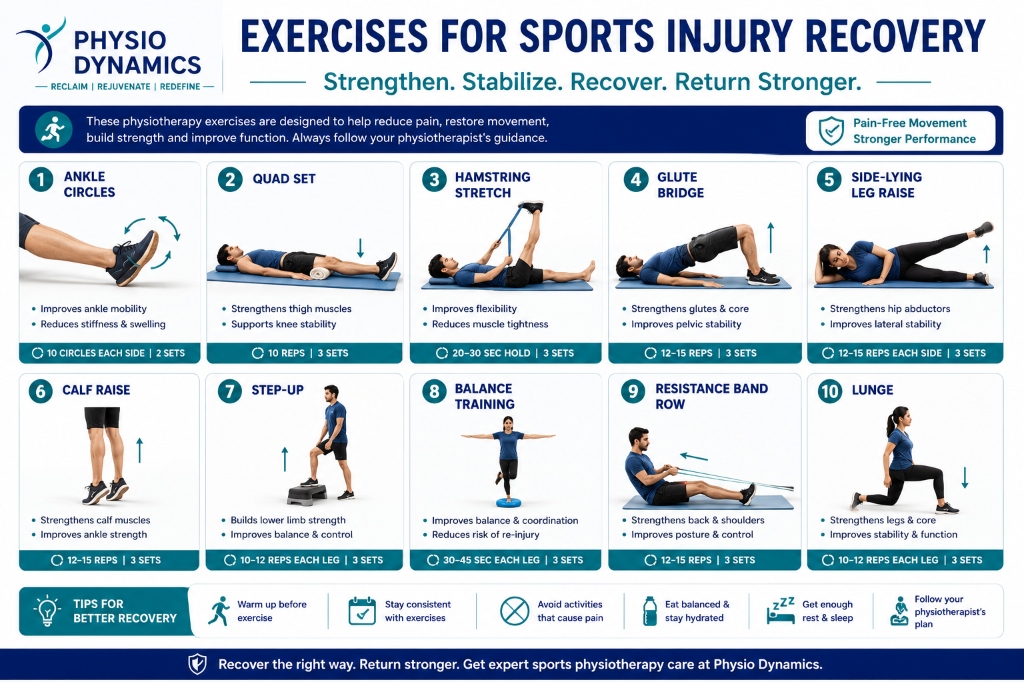
Athletic Conditioning and Injury Prevention Exercises recommended by Physio Dynamics
Sports Physiotherapy at Physio Dynamics
At **Physio Dynamics** (Panamaram, Wayanad), we help athletes transition from recovery to peak performance. We provide:
Frequently Asked Questions
Elevate Your Athletic Performance
If small aches are limiting your training, or you want to prevent sports injuries, let our sports physical therapists analyze your movement.