
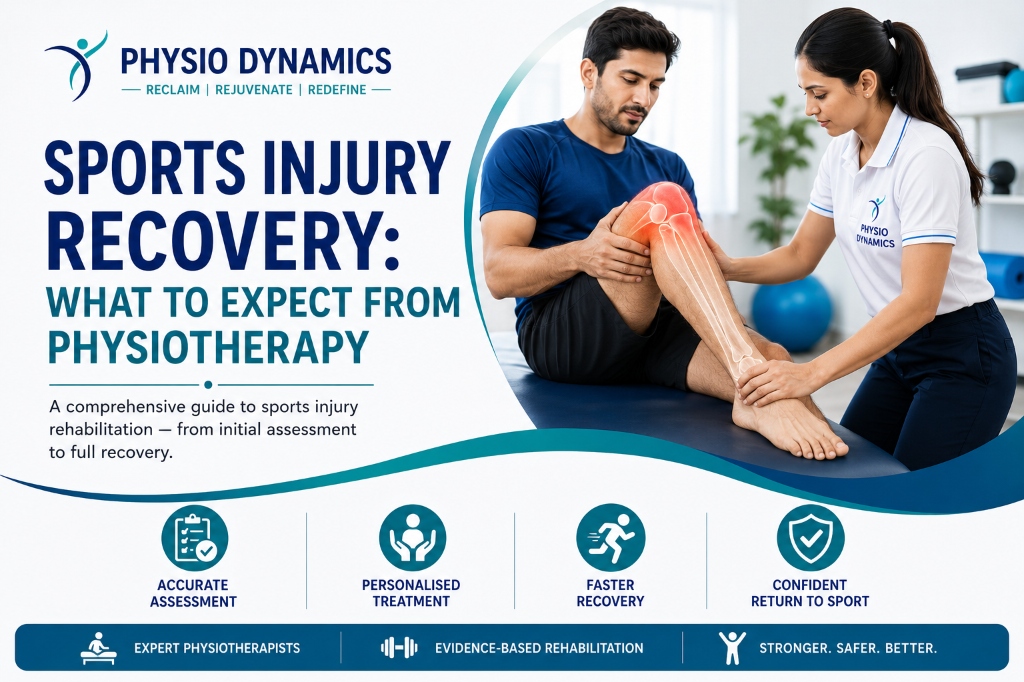
Whether you're a professional athlete, weekend football player, runner, cyclist, or fitness enthusiast, sports injuries can disrupt your training, performance, and daily life. While rest is important, a structured physiotherapy program is often the key to recovering safely and returning to your sport stronger than before.
In this guide, we'll explain how sports physiotherapy works, what happens during rehabilitation, and what you can expect throughout your recovery journey at Physio Dynamics, Panamaram, Wayanad.
Note: Every injury is unique. Recovery timelines vary depending on the type and severity of the injury, your overall health, and how consistently you follow your rehabilitation program. Always consult a qualified physiotherapist before starting any exercise programme.
What Is Sports Physiotherapy?
Sports physiotherapy focuses on the prevention, assessment, treatment, and rehabilitation of injuries related to physical activity and sports.
Unlike general physiotherapy, sports rehabilitation emphasizes restoring strength, mobility, balance, agility, and sport-specific performance while minimising the risk of reinjury. Sports physiotherapy can help athletes of all ages — from school and college players to recreational fitness enthusiasts and professional competitors.
Common Sports Injuries Treated by Physiotherapists
Sports injuries vary depending on the activity, but some of the most common include:
Early treatment often leads to faster recovery and better long-term outcomes.
What Happens During Your First Physiotherapy Visit?
Your first appointment includes a detailed assessment to understand your injury and recovery goals. Your physiotherapist will evaluate:
- How the injury occurred
- Your pain level and location
- Swelling and inflammation
- Joint mobility and flexibility
- Muscle strength and balance
- Walking or running pattern
- Previous injuries
- Sports participation and training routine
Based on the assessment, a personalised rehabilitation plan will be developed specifically for your injury, goals, and sport.
Stages of Sports Injury Rehabilitation
Phase 1 – Pain Relief and Protection
The first priority is reducing pain and controlling inflammation. Treatment may include:
- Manual therapy
- Ice or heat therapy
- Electrotherapy (when appropriate)
- Gentle mobility exercises
- Compression and sports taping
- Activity modification
Phase 2 – Restoring Movement
Once pain begins to settle, rehabilitation focuses on restoring normal joint mobility and flexibility. Exercises may include:
- Stretching exercises
- Range-of-motion exercises
- Joint mobilization
- Soft tissue techniques
Phase 3 – Strength and Stability
As healing progresses, strengthening becomes the main focus. Your program may include:
- Core strengthening
- Resistance band exercises
- Bodyweight exercises
- Balance training
- Stability exercises
- Functional strengthening
Phase 4 – Sport-Specific Training
Before returning to your sport, rehabilitation becomes more functional and sport-focused. Training may include:
- Running drills
- Jumping and landing techniques
- Agility exercises
- Direction-change drills
- Coordination training
- Endurance conditioning
Phase 5 – Return to Sport
Returning too early can increase the risk of reinjury. Before giving clearance, your physiotherapist will assess:
- Pain-free movement
- Full joint mobility
- Muscle strength
- Balance and coordination
- Functional performance
- Confidence during activity
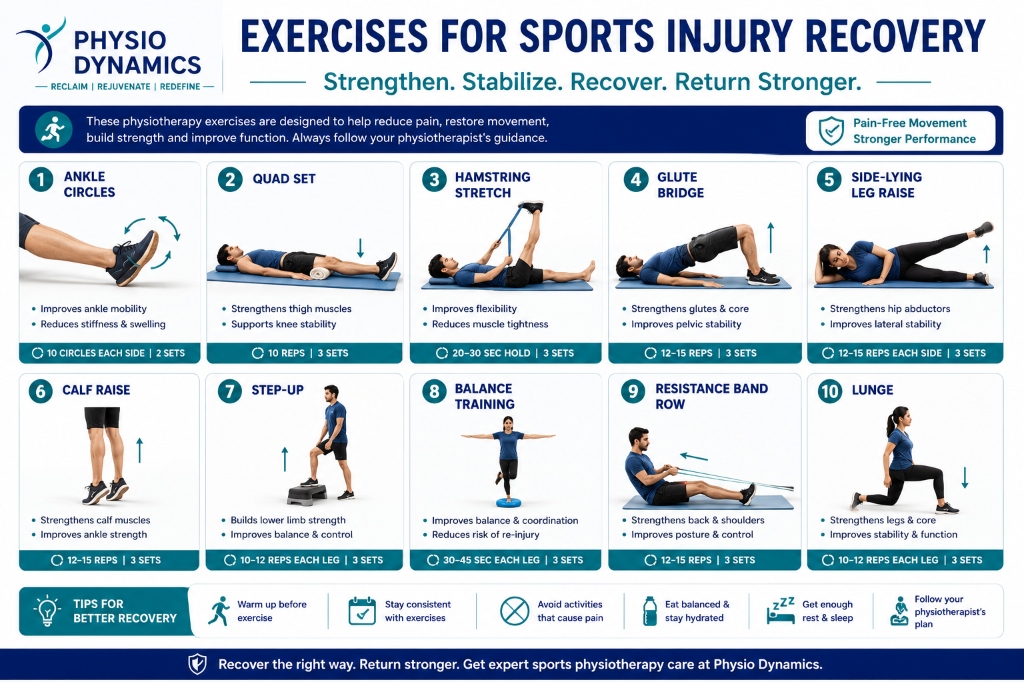
10 Key Exercises for Sports Injury Recovery — recommended by Physio Dynamics, Panamaram, Wayanad
Benefits of Physiotherapy for Sports Injuries
Professional sports rehabilitation offers several significant advantages:
Tips for a Faster Recovery
You can actively support your rehabilitation by:
- Following your exercise program consistently
- Avoiding activities that worsen pain
- Staying well-hydrated
- Eating a balanced, protein-rich diet
- Getting adequate sleep and rest
- Wearing appropriate footwear
- Warming up properly before exercise
- Cooling down after every workout
Recovery is a gradual process — consistency is more important than speed.
When Should You See a Physiotherapist?
Seek professional care if you experience any of the following:
- Persistent pain after sports activities
- Swelling that doesn't improve
- Difficulty walking or running
- Joint instability or giving way
- Reduced range of motion
- Recurrent injuries to the same area
- Muscle weakness after an injury
Early intervention can shorten recovery time and help prevent long-term complications.
How Physio Dynamics Supports Sports Injury Recovery
At Physio Dynamics Physiotherapy & Sports Rehabilitation Centre in Panamaram, Wayanad, we provide personalised rehabilitation programs for athletes and active individuals of all ages and levels.
- Comprehensive sports injury assessment
- Manual therapy and joint mobilization
- Therapeutic exercise programs
- Dry needling (when appropriate)
- Sports taping and bracing
- Strength and conditioning guidance
- Posture and movement correction
- Injury prevention strategies
- Return-to-sport rehabilitation
Every treatment plan is designed around your goals, sport, and lifestyle to help you recover safely and perform at your best.
Frequently Asked Questions
Common questions about sports injury rehabilitation and recovery protocols
Book a Sports Injury Assessment in Wayanad
Whether you've suffered a recent sports injury or are struggling with recurring pain during training, our experienced physiotherapists can help you recover safely and confidently.
📞 Call: +91 62829 29104 | 📍 UB City Centre Building, Near Crescent Public School, Panamaram, Wayanad
Get Expert Advice Today
Don't wait for a minor niggle to become a major injury. Book an assessment with our expert team in Wayanad.