
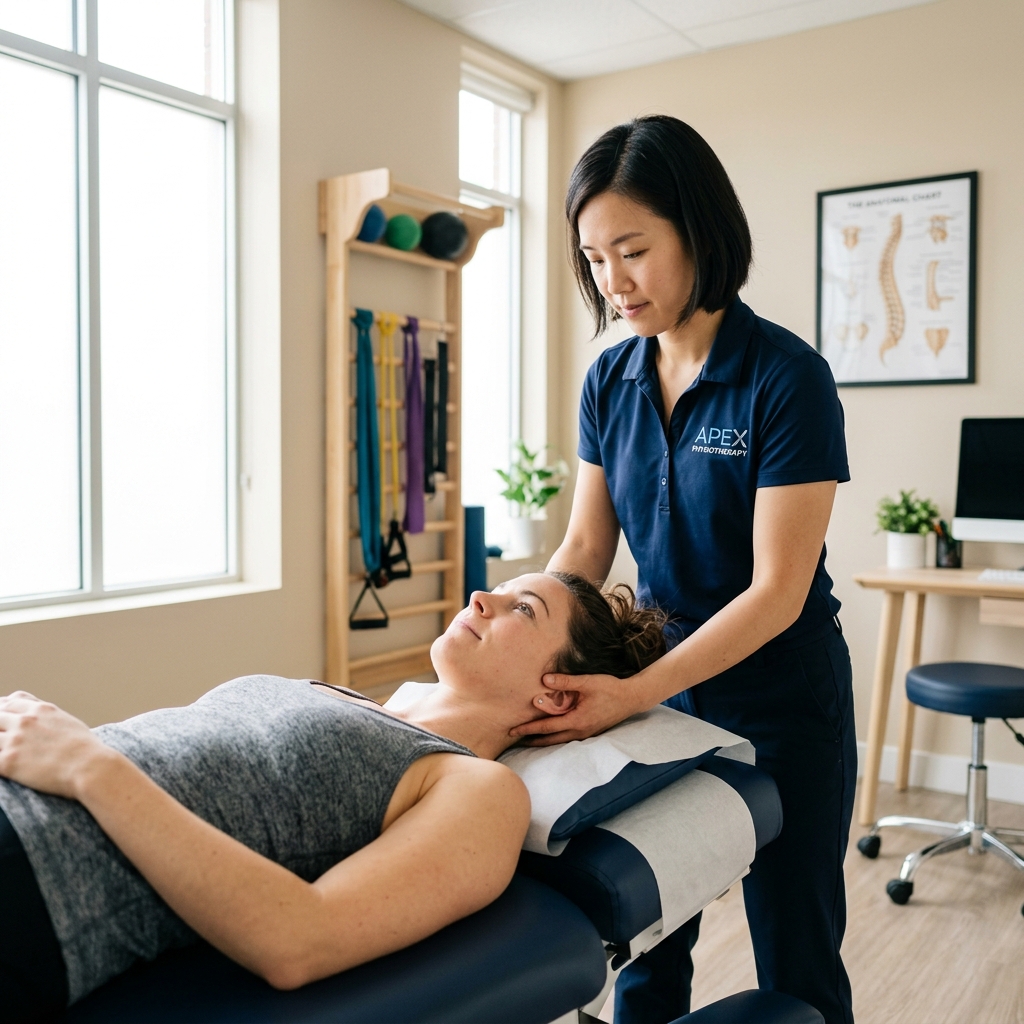
Chronic neck stiffness, pain when turning your head, or an occasional tingling sensation radiating down to your fingers are common features of **cervical spondylosis**. Often referred to as "arthritis of the neck" or neck wear-and-tear, cervical spondylosis involves age-related degeneration of the cervical discs and joints.
While wear-and-tear is a natural part of aging, poor modern posture (such as slouching over computer screens) accelerates the process. When left unmanaged, the body creates bone spurs (osteophytes) to stabilize the spine, which can narrow the nerve pathways and cause cervical radiculopathy.
At **Physio Dynamics** in Panamaram, Wayanad, lead physiotherapist **Dr. Sandra Thomas (PT)** focuses on conservative management of cervical spondylosis. Through manual therapy, traction, and posture-correcting exercises, we relieve joint compression and restore fluid, pain-free movement.
Safety Warning: Seek immediate medical attention if you experience progressive arm weakness, coordination issues in your hands, or difficulty walking (balance issues). These are signs of cervical myelopathy (spinal cord compression).
Symptoms of Cervical Spondylosis
Symptoms develop gradually and can include:
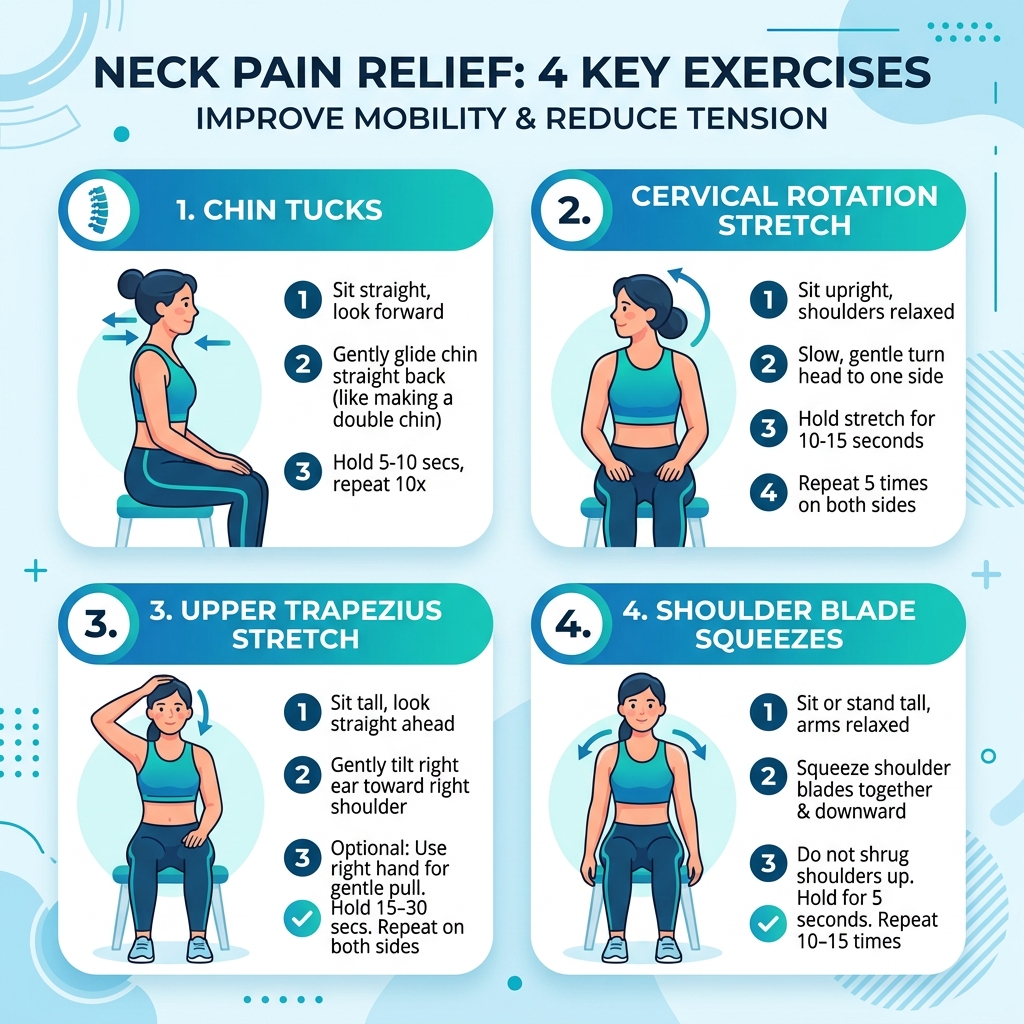
Cervical Stabilization Exercises recommended by Physio Dynamics, Panamaram, Wayanad
4 Key Exercises for Cervical Spondylosis
Chin Tucks
Chin tucks strengthen the deep neck stabilizers, helping pull your head back over your shoulders to correct forward head posture.
How to Perform
- Sit straight and look directly forward.
- Glide your head straight backward, as if making a double chin. Keep your eyes and chin level.
- Hold for 5–10 seconds.
- Relax. Repeat.
Isometric Neck Exercises
Isometric exercises strengthen the neck muscles without moving the joints, avoiding friction on worn-out cervical facets.
How to Perform
- Forehead: Place your palm flat against your forehead. Push your head forward while resisting with your hand (no head movement). Hold 5 seconds.
- Side: Place your hand on the side of your head. Push your head sideways against your palm. Hold 5 seconds. Repeat on the other side.
- Back: Place clasped hands behind your head and resist pushing backward. Hold 5 seconds.
Shoulder Rolls & Shrugs
This exercise relaxes the upper trapezius and levator scapulae muscles, which often spasm to protect a stiff neck.
How to Perform
- Stand or sit comfortably with arms relaxed.
- Lift your shoulders up toward your ears (shrug).
- Roll them backward in a smooth circular motion.
- Lower your shoulders back down flat. Repeat in reverse direction.
Gentle Rotation Stretch
Maintaining head rotation is vital to prevent permanent stiffness of the cervical joints.
How to Perform
- Sit upright in a supportive chair.
- Slowly turn your head to the right as far as comfortable without pain.
- Hold for 10 seconds.
- Slowly return to center, then repeat to the left.
How Physiotherapy Treats Cervical Spondylosis
Chronic neck wear requires professional manual therapy to keep the joints mobile and healthy. At **Physio Dynamics** (Panamaram, Wayanad), we provide:
Frequently Asked Questions
Relieve Neck Stiffness Today
If cervical spondylosis pain or headaches are limiting your day, let Dr. Sandra Thomas (PT) guide your recovery.