
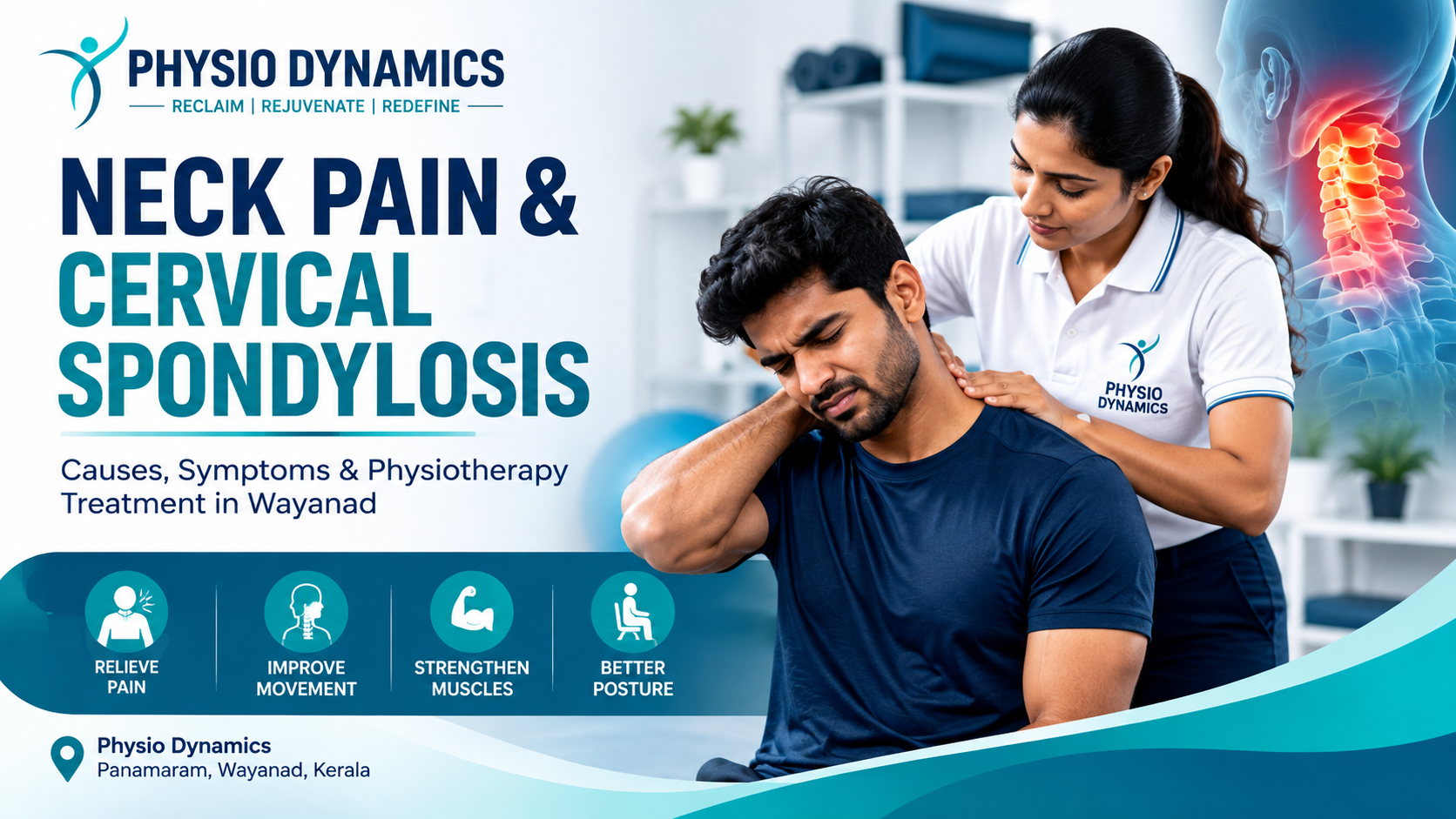
Neck pain and stiffness are common problems that can affect people of all ages. Long hours working on a computer, frequent smartphone use, prolonged driving, poor posture, muscle strain and age-related changes in the cervical spine can all contribute to neck discomfort.
For some people, neck pain may be temporary and improve with appropriate movement and rest. For others, persistent pain and stiffness may be associated with conditions such as cervical spondylosis. If neck pain is affecting your sleep, work, driving or everyday activities, understanding the possible cause is an important first step toward effective management.
What Is Cervical Spondylosis?
Cervical spondylosis refers to age-related changes affecting the bones, discs and joints of the cervical spine — the part of the spine that forms your neck.
As we age, the discs between the vertebrae can gradually lose water and become less flexible. The joints and surrounding structures can also develop degenerative changes. These changes are common with increasing age and do not always cause symptoms.
When symptoms do occur, a person may experience:
- Neck pain or stiffness that restricts daily head turning
- Reduced neck movement and feeling of tightness
- Muscle tightness across the trapezius and shoulders
- Headaches starting from the base of the neck
- Pain extending towards the shoulders or upper back
- Numbness or tingling in the arm in some cases
- Weakness when a spinal nerve is significantly compressed or irritated
While cervical spondylosis is more commonly associated with ageing, neck pain can also occur in younger adults due to muscle strain, prolonged postures, previous injuries and repetitive desk work.
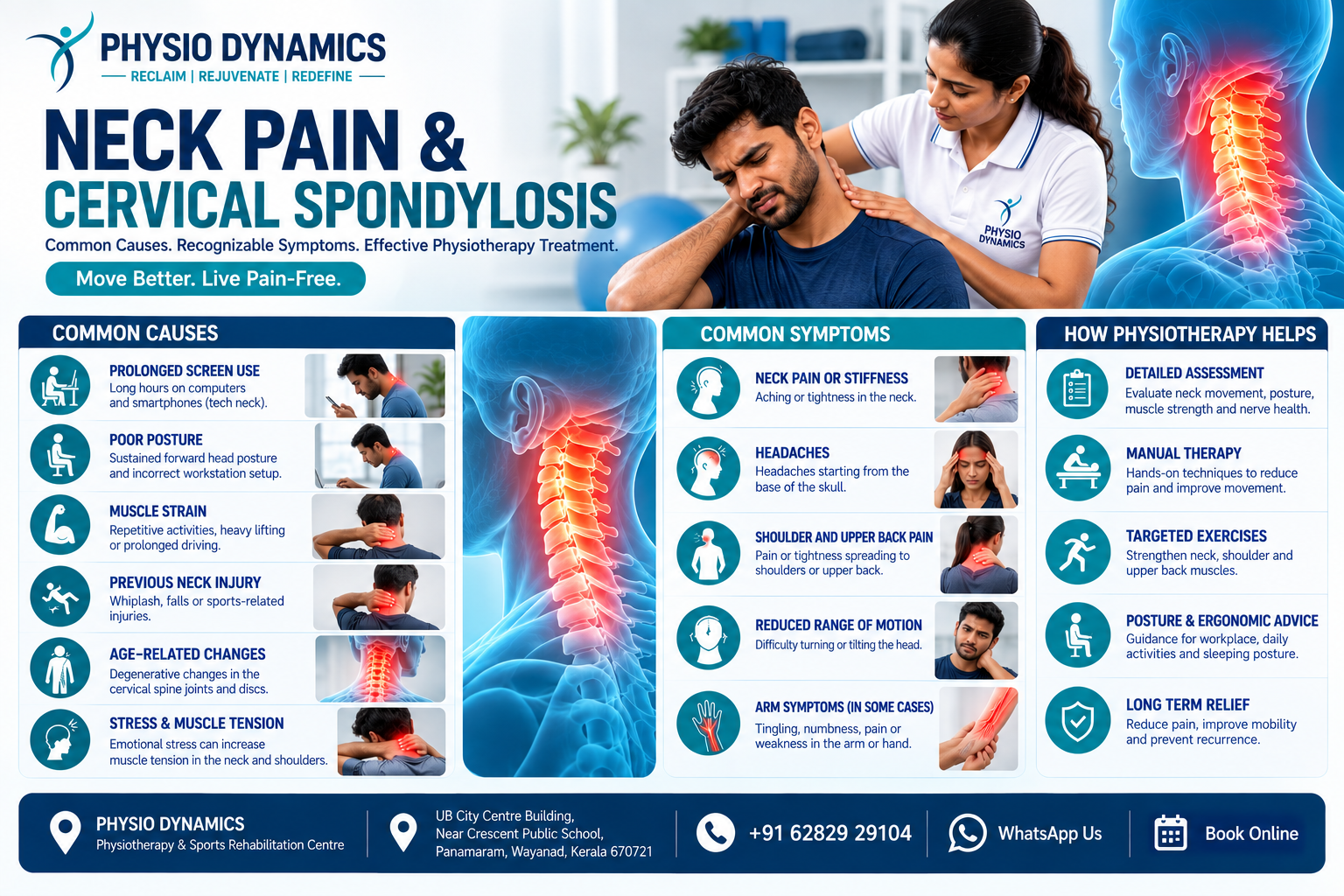
Common Causes and Risk Factors for Neck Pain
Neck pain can have several possible causes. Some common contributing factors include:
1. Prolonged Screen Use ("Tech Neck")
Spending several hours working on a laptop or looking down at a smartphone can keep the neck in a sustained forward position. Over time, this contributes to muscle fatigue, stiffness, and cervical strain.
2. Poor or Sustained Posture
Sitting for long periods with the head positioned forward, shoulders rounded, or the workstation poorly adjusted places continuous mechanical strain on the neck and upper-back joints.
3. Muscle Strain
Sudden movements, repetitive activities, heavy lifting, prolonged driving, or an awkward sleeping position can strain the stabilizing muscles around the neck and shoulders.
4. Previous Neck Injury
Previous injuries such as whiplash, falls, or sports-related impacts can sometimes contribute to long-standing joint restriction and recurring neck discomfort.
5. Age-Related Changes
Degenerative disc dehydration and gradual wear on the facet joints become more common with age, contributing to cervical spondylosis.
6. Stress and Muscle Tension
Psychological stress frequently increases involuntary muscle guarding, particularly around the neck and shoulder girdle, which can significantly aggravate existing symptoms.
Common Symptoms of Neck Pain and Cervical Spondylosis
Symptoms vary depending on the underlying cause and the structures involved. Common symptoms include:
- Neck pain or dull, persistent aching
- Neck stiffness, especially in the morning or after sitting for long hours
- Difficulty turning or tilting the head when looking over your shoulder
- Tightness around the neck, trapezius and shoulder girdle
- Pain extending into the shoulder blade or upper back
- Headaches associated with neck stiffness or neck movement (cervicogenic headaches)
- Clicking or grinding sensations (crepitus) during neck rotation
- Reduced functional range of motion
If a cervical spinal nerve is irritated or compressed, symptoms may travel down the arm or into the hand, which may feel like:
- Tingling ("pins and needles")
- Numbness in the fingers or forearm
- Burning or shooting pain down the arm
- Weakness in grip or arm movement
When Should You Seek Immediate Medical Attention?
Most uncomplicated neck pain does not require emergency care. However, certain "red flag" symptoms require prompt medical evaluation:
- Significant or progressive weakness in an arm or hand
- Persistent numbness or radiating tingling down the fingers
- Difficulty walking, unsteadiness, or balance disturbance
- Loss of coordination (such as difficulty buttoning a shirt)
- Severe neck pain immediately following trauma or a fall
- New difficulty with bladder or bowel control
5 Simple Tips to Help Manage Neck Stiffness
1. Take Regular Movement Breaks
Avoid staying in the same sitting position for hours. If you work at a computer, take short movement breaks every 30–45 minutes. Stand up, walk around, and gently mobilize your neck and shoulders.
2. Adjust Your Computer Setup
Position your monitor so that you can look at the screen comfortably without constantly bending your neck forward. Keep your keyboard and mouse within easy reach and support your lower back.
3. Avoid Prolonged Phone Use in a Downward Position
Holding your smartphone low keeps your neck in deep flexion. Bring the device closer to eye level whenever possible and take regular posture check breaks.
4. Stay Physically Active
Regular physical activity maintains joint mobility and muscular endurance. Brisk walking, general conditioning, and spine-strengthening exercises improve overall neck resilience.
5. Maintain a Comfortable Sleeping Position
Choose a supportive pillow that maintains your cervical spine in neutral alignment. If you frequently wake with neck stiffness, your sleeping setup is worth reviewing with a physiotherapist.
Gentle Exercises for Neck Pain
For uncomplicated neck stiffness, gentle mobility exercises help restore range of motion and activate deep postural stabilizers:
Chin Tucks (Cervical Retraction)
Restores natural head-over-shoulder cervical alignment and strengthens deep neck flexors.
- Sit tall with relaxed shoulders, looking straight ahead.
- Gently glide your chin horizontally backward as if creating a subtle double chin.
- Keep your eyes level without tilting your head up or down.
- Hold for 3–5 seconds, then relax back to neutral.
Gentle Neck Rotation
Relieves facet joint stiffness and eases muscle guarding on the sides of the neck.
- Sit upright with relaxed shoulders and an elongated spine.
- Slowly rotate your head toward your right shoulder until you feel a comfortable stretch.
- Pause for 2 seconds, smoothly return to centre, and repeat to the left side.
- Never force movement into sharp pinching pain.
Shoulder Blade Squeezes (Scapular Retraction)
Strengthens the rhomboids and mid-back to counteract slouched, rounded shoulder posture.
- Sit or stand upright with your arms relaxed by your sides.
- Gently squeeze your shoulder blades backward and slightly downward.
- Hold for 5 seconds while breathing smoothly (do not hold your breath).
- Gently release back to starting position.
* Note: These exercises should feel comfortable. If any movement triggers sharp pain, spreading numbness, tingling or weakness, stop immediately and consult your physiotherapist.
How Physiotherapy Can Help With Neck Pain
Physiotherapy offers evidence-informed assessment and targeted rehabilitation for acute and chronic neck conditions. At Physio Dynamics in Panamaram, Wayanad, treatment is customized to your clinical findings and daily activity demands:
- Comprehensive Assessment: We evaluate cervical range of motion, muscle strength, joint mobility, posture, neurological function, and aggravating biomechanical factors.
- Manual Therapy: Where appropriate, gentle hands-on techniques, soft-tissue release, and joint mobilizations help alleviate muscle spasms and restore normal joint gliding.
- Therapeutic Exercises: Structured deep neck flexor strengthening, scapular stabilization, and upper-back mobility exercises restore muscular endurance and prevent recurrence.
- Ergonomic & Postural Advice: Practical workplace, screen height, driving, and sleep positioning advice to eliminate daily neck strain.
Can Physiotherapy Cure Cervical Spondylosis?
Cervical spondylosis involves age-related degenerative changes in the spine, meaning physiotherapy cannot reverse the physical wear of the joints or discs. However, physiotherapy is remarkably effective at helping people manage symptoms and regain pain-free function.
Rehabilitation focuses on:
- Relieving muscular tension and stiffness
- Restoring functional neck mobility
- Strengthening the muscular support around the neck
- Improving postural control and movement mechanics
- Preventing frequent flare-ups and slowing down functional decline
Heat or Ice for Neck Pain: Which Is Better?
Both heat and cold therapy can provide temporary symptom relief depending on the nature of your neck pain:
Best for chronic muscular tightness, morning neck stiffness, and relaxation before performing mobility exercises. It promotes local circulation and eases muscle spasms.
Best for sudden flare-ups, acute muscle strains, or recent injuries within the first 48 hours to help numb localized pain and calm inflammation.
Tip: Always wrap hot or cold packs in a towel to protect your skin, and limit applications to 15–20 minutes at a time.
Explore Related Spine & Joint Guides
Learn more about spine rehabilitation, nerve pain management, and joint recovery with our specialized guides:
Frequently Asked Questions
Common questions about neck pain and cervical spondylosis physiotherapy in Wayanad
Get Expert Neck Pain Relief in Panamaram, Wayanad
Persistent neck stiffness or radiating pain holding you back? Book an individualized physiotherapy assessment with Dr. Sandra Thomas at Physio Dynamics.