
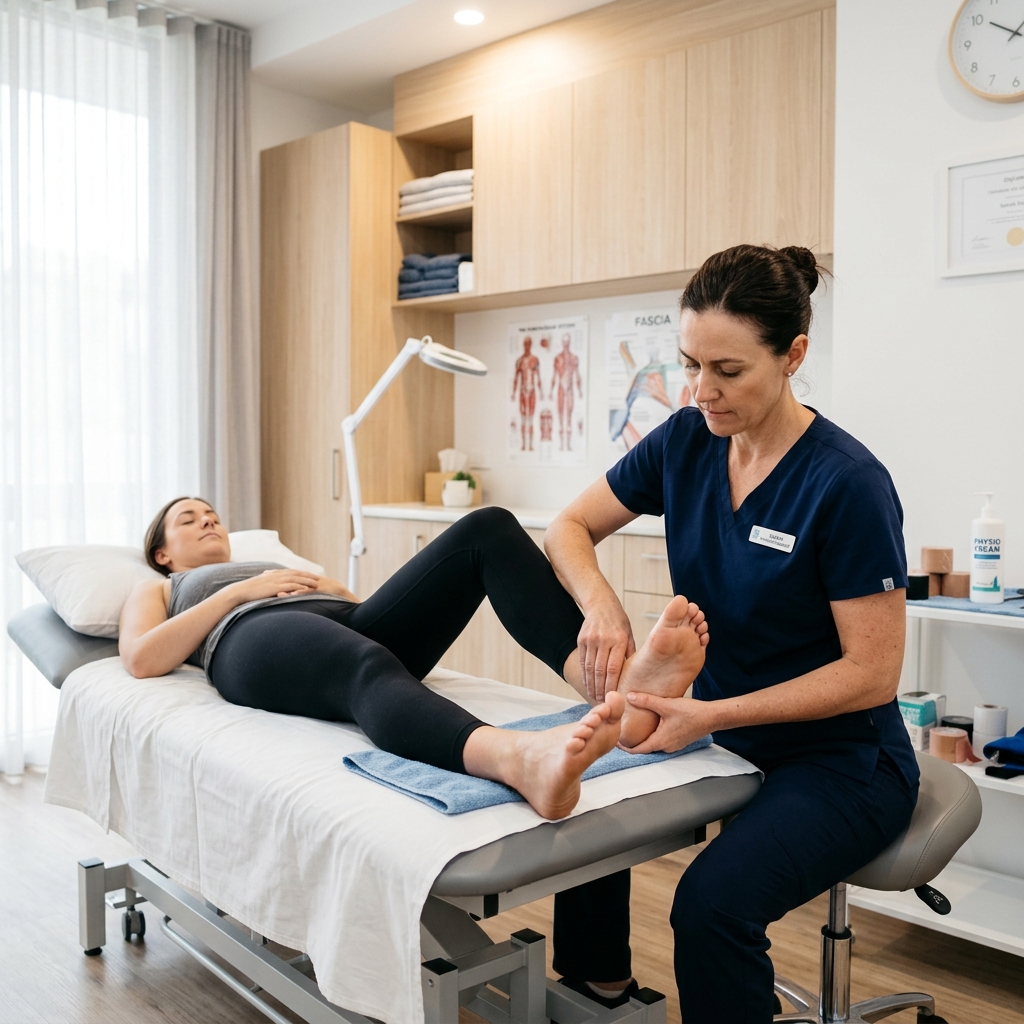
Walking out of bed in the morning should not feel like stepping onto sharp needles. If your very first steps of the day cause a sharp, stabbing pain under your heel that gradually dulls as you walk, you are likely suffering from **plantar fasciitis**.
Plantar fasciitis is the leading cause of heel pain worldwide. It involves inflammation and micro-tears of the **plantar fascia** — the thick, flat band of connective tissue running along the bottom of your foot that links your heel bone to your toes and maintains your foot arch.
At **Physio Dynamics** in Panamaram, Wayanad, lead physiotherapist **Dr. Sandra Thomas (PT)** emphasizes that a proper combination of targeted stretches, intrinsic foot muscle strengthening, and myofascial release is highly effective at permanently curing heel pain.
Important Note: Early intervention is critical. If left untreated, plantar fasciitis can lead to chronic foot, knee, hip, and back pain because your body alters its gait to protect the painful heel.
What Causes Plantar Fasciitis?
Plantar fasciitis is an overload injury. Common risk factors include:
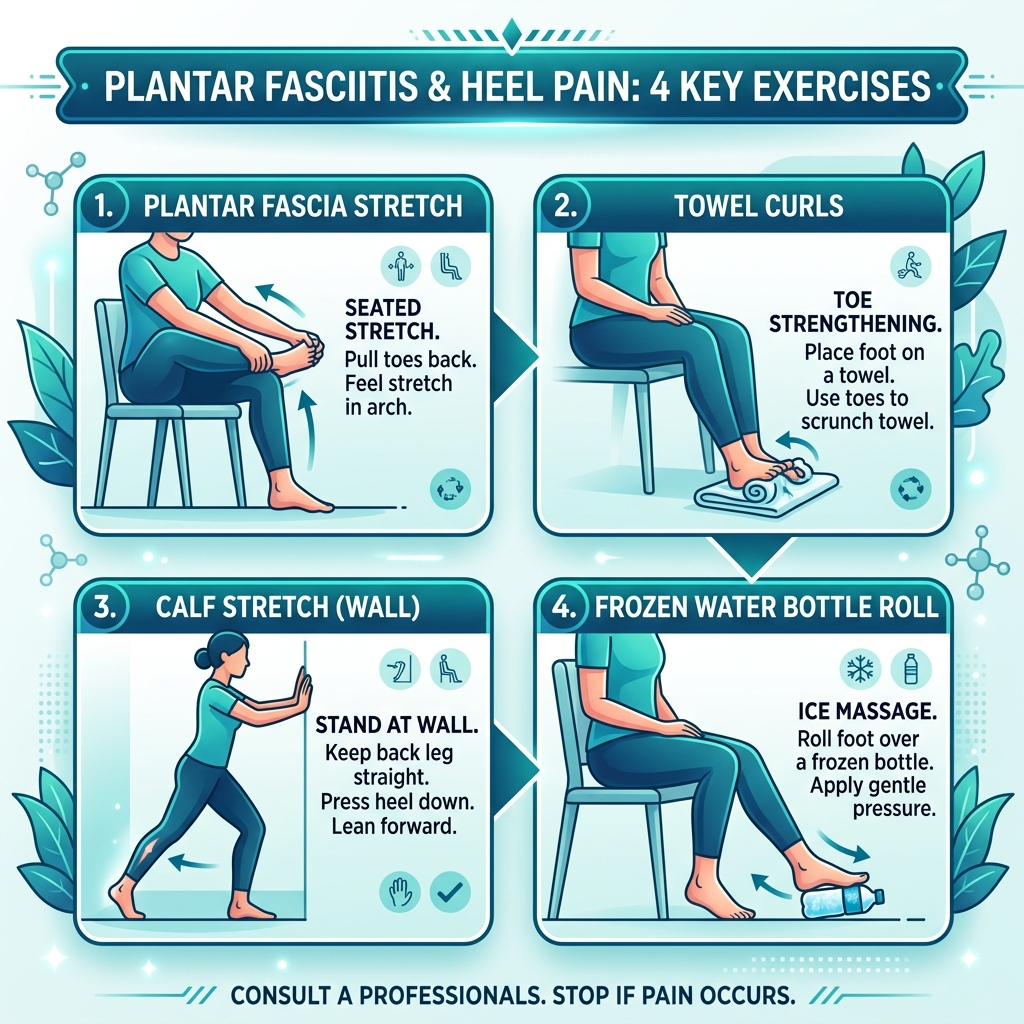
4 Essential Exercises for Plantar Fasciitis recommended by Physio Dynamics, Panamaram, Wayanad
4 Key Exercises for Heel Pain Relief
Plantar Fascia Seated Stretch
This stretch directly targets the plantar fascia ligament itself. Studies show stretching the fascia before stepping out of bed dramatically reduces morning pain.
How to Perform
- Sit down and cross your affected foot over your opposite knee.
- Grasp your toes and gently pull them backward toward your shin bone.
- Use your other hand to feel the tension in the arch of your foot; it should feel like a taut band.
- Hold the stretch for 15 seconds.
Towel Curls (Foot Arch Strengthening)
Strengthening the small intrinsic muscles under the foot helps support the arch, taking the physical strain off the plantar fascia ligament.
How to Perform
- Sit in a chair with your foot flat on a towel laid on the floor.
- Keep your heel flat on the floor, and curl your toes to scrunch the towel toward you.
- Let the towel go and repeat the motion.
- Perform this slowly and focus on lifting the arch of your foot.
Standing Calf Stretch (Wall)
Tight calves place massive pull on the heel bone, stretching the plantar fascia thin. Stretching the gastrocnemius calf muscle relieves this pull.
How to Perform
- Stand facing a wall, placing your hands flat against it.
- Step your affected leg back, keeping the knee straight and heel flat on the floor.
- Bend your front knee and lean forward toward the wall until you feel a stretch in your back calf.
- Hold for 20-30 seconds. Do not bounce.
Frozen Water Bottle Roll
This technique combines ice therapy (to reduce local inflammation) with deep tissue massage (to stretch the plantar fascia).
How to Perform
- Fill a plastic water bottle with water and freeze it.
- Sit in a chair, place the frozen bottle on the floor, and place your bare arch over it.
- Slowly roll your foot back and forth over the bottle, applying gentle pressure.
- Focus on the arch and heel areas.
How Physiotherapy Heals Plantar Fasciitis
Persistent heel pain often requires advanced clinical therapies to kick-start healing. At **Physio Dynamics** (Panamaram, Wayanad), we offer:
Frequently Asked Questions
Step Pain-Free Again
If heel pain is stopping you from walking or running, let our expert physiotherapists guide your recovery.